
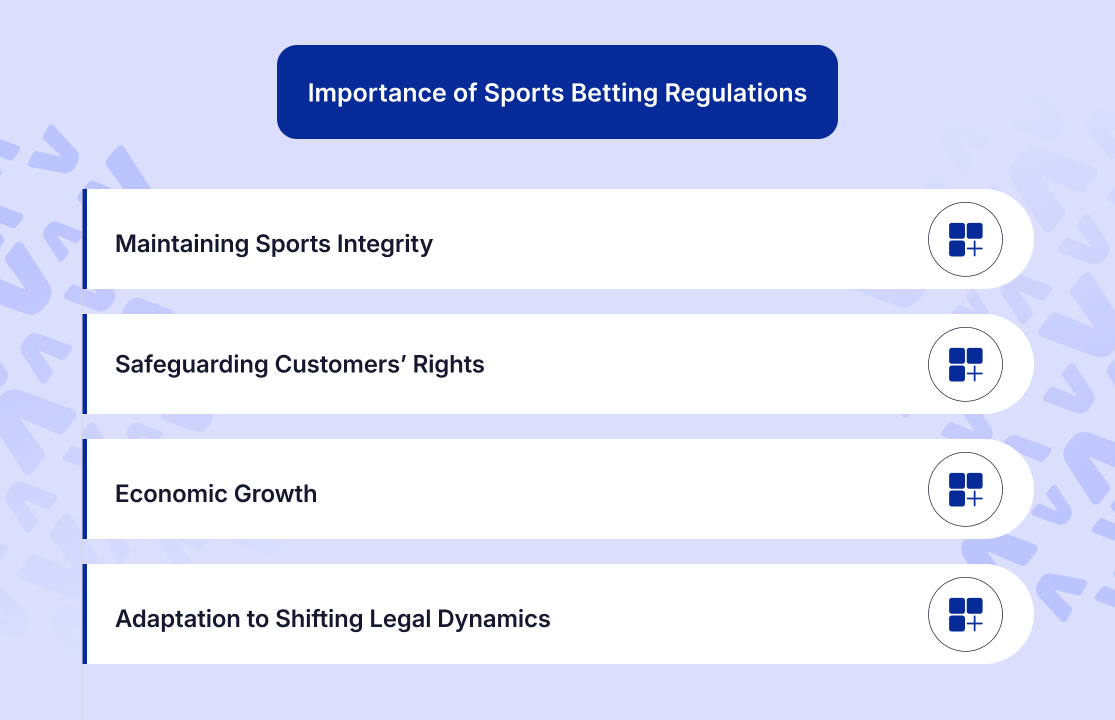

Maintaining Sports Integrity
- Prevents illegal activities by thoroughly monitoring betting patterns.
- Ensure fair play and transparency by subjecting to legal guidelines.
- Detects any potential fraud through betting data reporting and analytics.

Safeguarding Customers’ Rights
- Responsible gambling measures, such as self-exclusion programs, betting limits, spending alerts, support resources, etc, are imposed to eliminate risky gambling.
- Sports betting regulations enable operators to provide fair play, secure transactions, and privacy protection through AML or KYC procedures.
- Prevents underage betting as well as misleading ads, following strict guidelines introduced by legal bodies.

Economic Growth
- States collect significant taxes, which are utilized in public services funding involving education, infrastructure, and more.
- Fuels job creation in various sectors, increasing employment opportunities, thereby leading to economic elevation.
- Prevents illegal, unregulated, and untaxed betting markets by adhering to legal and regulatory frameworks, opposing the black market.

Adaptation to Shifting Legal Dynamics
- Quickly adapting to the changing trends and market dynamics leads sportsbooks to gain a competitive edge in the industry.
- AI and eSports betting are some major technological advancements in legal trends, enabling sportsbooks to stay compliant with the shifting iGaming compliance.




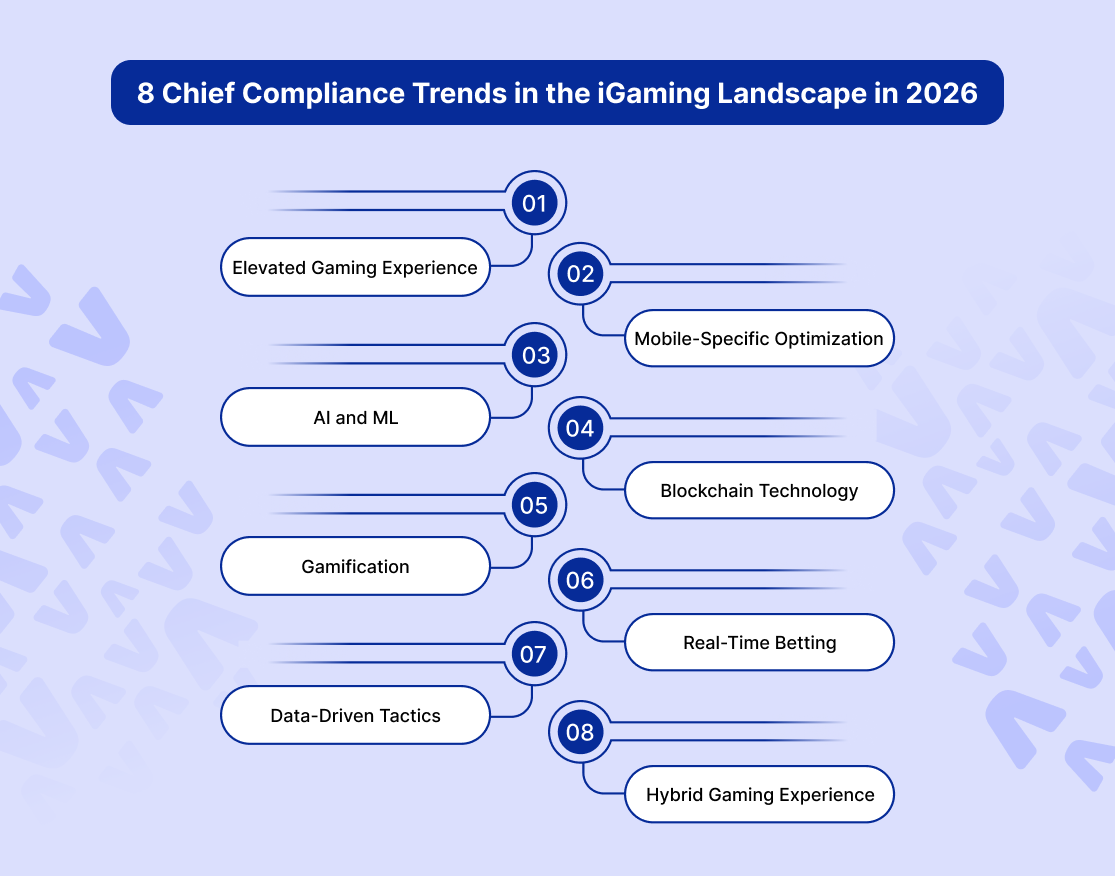

Elevated Gaming Experience
A blend of Virtual Reality (VR) and Augmented Reality (AR) is transforming the entire iGaming landscape, offering bettors greater engagement and realistic gambling experience.
Mobile-Specific Optimization
Mobile-friendly designs and optimization are fueled in today’s betting landscape, for bettors’ ultimate convenience, fostering an exceptional mobile gaming experience.
AI and ML
AI and ML allow sportsbooks to easily detect fraud at early stages, personalize betting experience as well as automate decision-making processes.
Blockchain Technology
Blockchain technology fuels cryptocurrency transactions around the world, which has made the transactions even more accessible and secure for users.
Gamification
Gamification elements like leaderboards, achievements, tournaments, etc., personalize users’ experience, boosting player engagement and retention.
Real-Time Betting
Dynamic gaming shift has increased demand for microbetting and in-game betting amongst the users, boosting interaction while maintaining active engagement.
Data-Driven Tactics
Operators gain access to bettors’ behaviour and betting patterns through reporting and analytics tools, upgrading their offerings for better engagement and retention.
Hybrid Gaming Experience
In-land gaming experience blended with the digital gaming experience offers an unmatched betting experience. To bettors, where they play as well as witness communal bonding for an elevated experience.
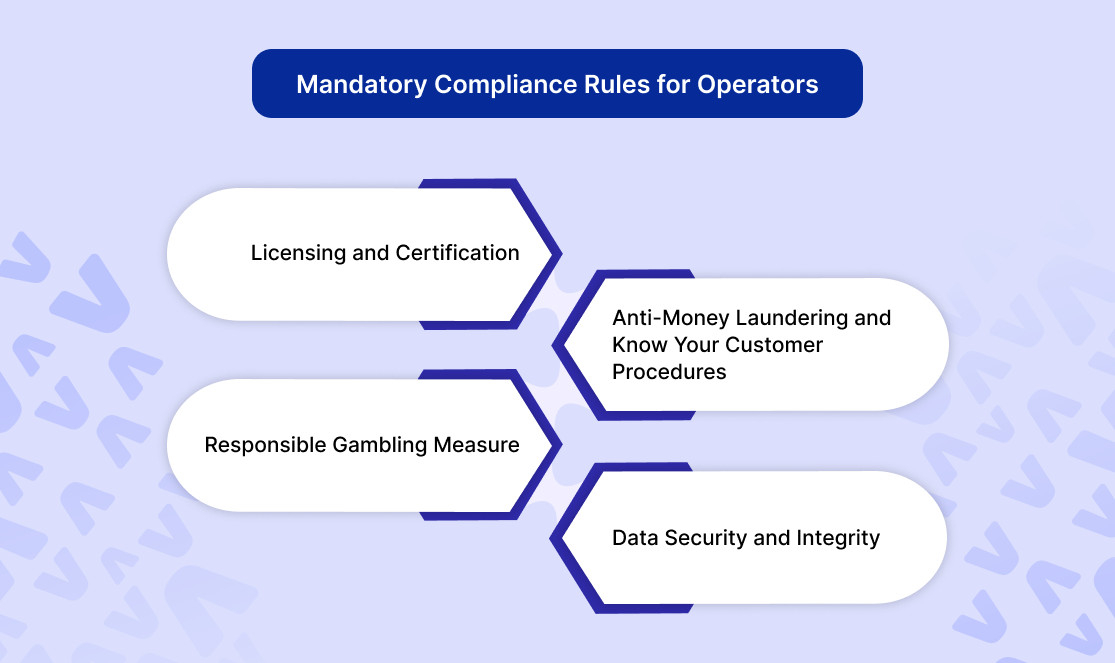
Licensing and Certification
- Obtain all necessary licenses and certifications from the legal authorities of the jurisdiction you’re setting up your business.
- Promote responsible gambling by acquiring business operating as well as personal licenses for staff.
Anti-Money Laundering and Know Your Customer Procedures
- Verify identity, age, players’ registration addresses, and more through biometric checks and ID verification.
- Perform in-depth financial checks, such as monitoring unusual betting patterns and suspicious transactions, to eliminate money laundering.
Responsible Gambling Measure
- Employ Player Protection tools such as self-exclusion, betting limits, and spending limits to safeguard them against risky gambling.
- Offer resources that educate bettors on responsible gambling, possible risk, ways to manage bankroll, as well provide access to support communities and organizations.
Data Security and Integrity
- Cybersecurity controls shall be in place to protect users against suspicious betting patterns, unsolicited logins, identity theft, and more.
- Implement encryptions like 2FA, multi-factor authentication, data protection tools, etc.
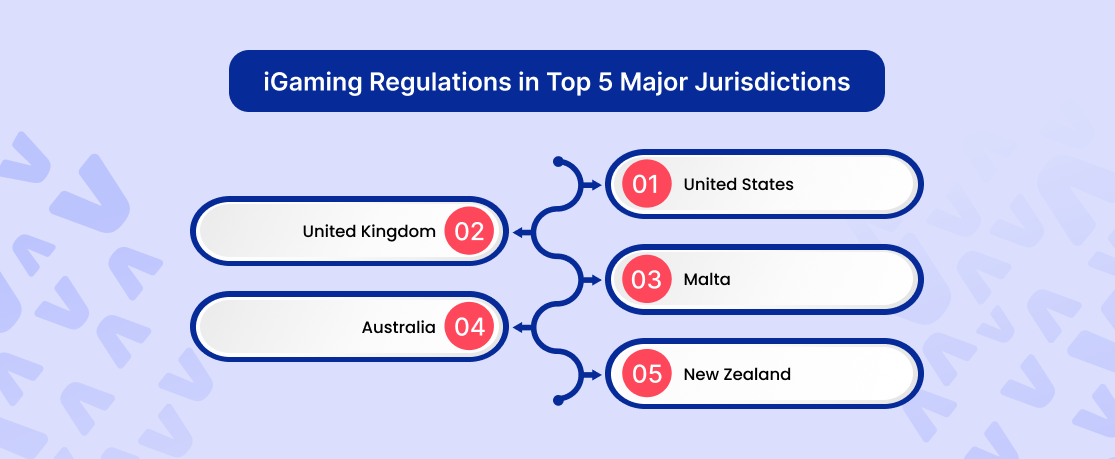
United States
- Operators must acquire a UKGC license.
- Betting Advertisements must be clear and not misleading
- Comply with the Anti-Money Laundering (AML) Procedure
United Kingdom
- The UK’s Gambling Act 2005 ensures fair and transparent play, which must be obeyed by operators
- Advanced verification tools and processes shall be adopted
- Self-exclusion programs and financial spending limits must be provided to bettors to promote responsible gambling
- Strictly mention true details in the advertisement to safeguard bettors against potential scams and fraud
Malta
- Operators must obtain an MGA License
- Implement responsible gambling tools as well as AML processes
- Competitive gaming taxes shall also be paid on time to avoid legal troubles
Australia
- iGaming compliance is regulated under the Interactive Gambling Act 2001
- Online betting can be done, however, after obtaining the state licences
- Online Casinos and Poker are not regulated
New Zealand
- Sports betting is regulated under the Gambling Act 2003
- Licensed operators can set up an online gambling business to maintain legal adherence
- Advertising must be done as per the responsible gambling guidelines generated by the legal authorities