

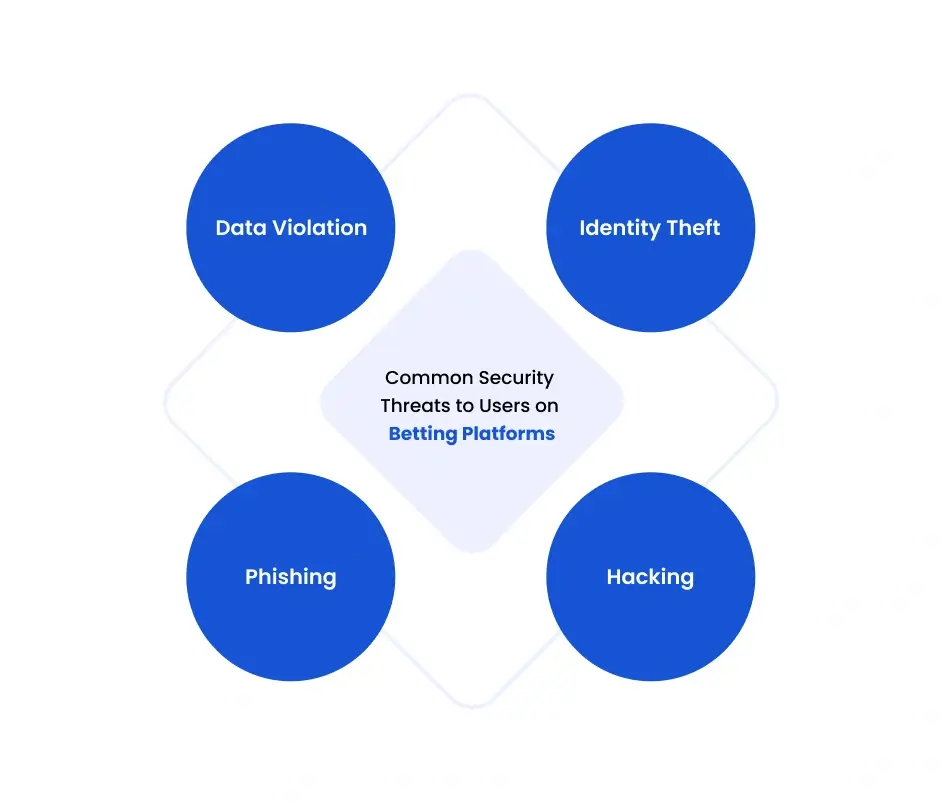

Data Violation
Data breaches are the most financially devastating threat to betting platform security. Attackers gain unauthorised access to stored user records, names, bank account details, passwords, and payment credentials, and weaponise them for large-scale financial fraud. A single breach can expose thousands of player accounts simultaneously, triggering regulatory investigations, massive fines, and irreversible reputational damage.

Identity Theft
The hackers steal your users’ personal information to commit scams or other fraudulent activities, impersonating them to open fake betting accounts, financial accounts, asking for money from others and filing fake taxes by stealing their identity.

Phishing
Phishing is a precision attack disguised as trust. Criminals craft convincing emails, SMS alerts, or fake login pages that mirror legitimate betting platforms down to the logo and layout. The moment a bettor clicks the link and enters their credentials, attackers capture everything, login details, payment data, and personal information, in real time. With phishing attempts growing more sophisticated every year, even experienced users get deceived, making platform-level defences non-negotiable.

Hacking
Hackers use several coding, guesswork or cracking passwords continuously to get into the user’s account on betting platforms, which further leads them to gain unauthorized access to their accounts, marking forceful account possession. This is the most common threat to cyber security in sports betting platforms, where hackers also gain access to their funds, bonuses and personal details for carrying out major cyber and financial frauds.


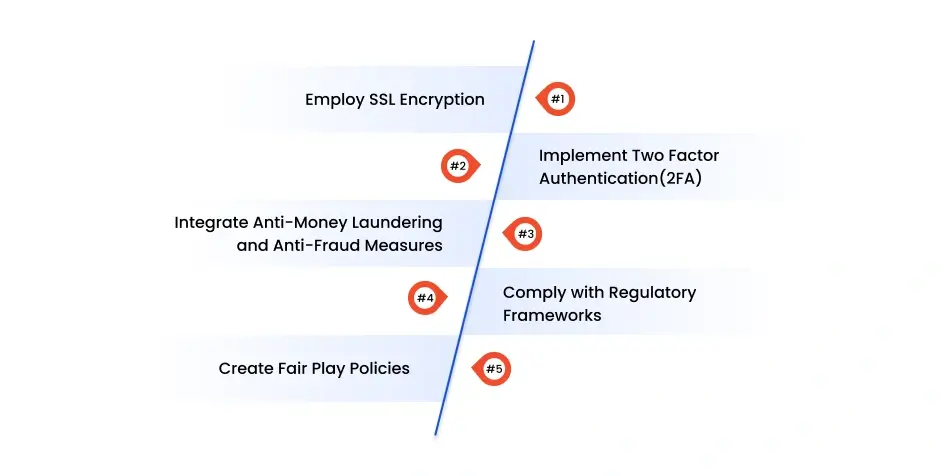

Employ SSL Encryption
SSL (Secure Socket Layer) encryption is the first line of defence for any betting platform, and the bare minimum players expect before trusting you with their money. It creates an unbreakable encrypted tunnel between the bettor's browser and your server, ensuring that every piece of data in transit, names, addresses, payment credentials, and login details, is completely unreadable to any interceptor. Platforms without SSL don't just face security risks; they face instant credibility loss, as modern browsers now flag unencrypted sites as "Not Secure" directly in the address bar.

Implement Two Factor Authentication(2FA)
Two-Factor Authentication (2FA) is the single most effective account protection measure an operator can deploy, and it costs almost nothing to implement. By requiring a second verification step beyond the password, a one-time code sent via SMS, email, or authenticator app, 2FA makes it virtually impossible for hackers to access an account even if they've already cracked the password. Studies show that 2FA blocks over 99% of automated account takeover attacks, making it one of the highest-ROI security investments a betting platform can make.

Integrate Anti-Money Laundering and Anti-Fraud Measures
Anti-money laundering and anti-fraud measures are crucial to employ within your betting platform as they prevent all fraudulent activities, which come in several forms such as illegitimate funding, terror funding, account takeovers, payment fraud and more.
There are several measures which you can employ within your platform to prevent these issues. Monitor users’ accounts for any suspicious activities such as odd login patterns, any changes in users’ personal information or suspicious transactions.
Verify the payment methods used by players before proceeding with withdrawals or deposits, keep track of the IP address to prevent creation of multiple accounts, set limits on claiming bonuses to prevent bonus abuse, and employ Know Your Customer(KYC) verification for identification to prevent fraudulent activities. It saves your platform from risks imposed on cyber security in sports betting platform and safeguards it against potential threats.

Comply with Regulatory Frameworks
Different jurisdictions have different rules and regulations complying with the industry standards, therefore, it is crucial that you gain complete knowledge of the regulatory frameworks you are registering your betting business to maintain the security of the players and the integrity of the platform as well.
There are certain standards that operators are required to adhere to by implementing proper measures, which saves your betting platform from any kind of penalties or legal actions. Failing to comply with the regulatory rules can send you into legal troubles, along with damage to your reputation as well as financial difficulties.

Create Fair Play Policies
A betting platform is unsuccessful without the implementation of fair play policies, which are crucial to maintaining the security of the platform as they ensure that games are operated transparently and fairly.
There are several techniques which are used by betting companies to ensure fair play, including Random Number Generators (RNGs), testing and securing certification from third-party authorities for fairness as per industry standards.
It also involves listing detailed information on game rules and payouts, implementing responsible betting rules and policies, as well as having processes to handle players’ complaints for resolving immediately for fairness.