
Launching a betting platform in 2026 is not easy. Rules are tighter. Markets move fast. Many operators struggle to enter regulated regions and stay compliant. Yet, this shift also opens big doors. More countries now support legal betting. Businesses want easy, legal betting platforms. Smart companies can grow faster, follow the rules, and be the first to succeed where laws exist.
Understanding the 2026 Regulated Betting Environment
The gambling business in 2026 is much more organized, watched closely, and full of chances than before. If you run a business that sells betting tools and services to other companies (B2B), knowing the rules isn’t just a choice anymore.
Key Regulatory Trends
- Stricter Compliance Frameworks: Governments want full control. New platforms must automatically check players’ IDs (KYC) and money details (AML) from the start. No more manual checking!
- Data Transparency & Responsible Gambling: Governments now require clear player data and tools for safer betting for the players. Standard rules include –Deposit Limits
– Self-Exclusion Options
– Risk Alerts
Platform operators need to detail how players’ data is stored, tracked, and utilized.
- Real-time Reporting Requirements: If reports are available late, it’s an inconvenience. Regulators need to see bets and player action right away. Slow platforms can get fined or lose their license.
Market Growth Indicators
- U.S. Sports Betting Revenue Surge (2024–2026): Sports betting is super popular in the U.S. Since lots more people are playing, companies need faster, better computer tech to handle all the action and money.
- Expansion of State-Level Legalization: More US states are allowing legal betting, each with different rules. The platforms that can quickly adapt to these new state rules will be the most successful.
Major Challenges in Launching a B2B Betting Platform
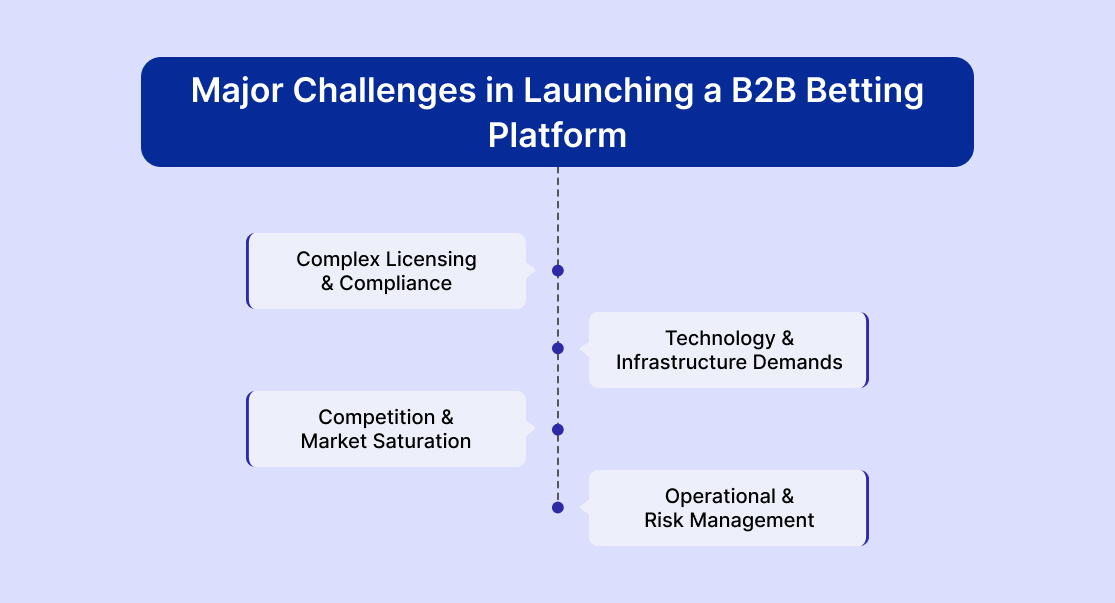
1. Complex Licensing & Compliance
Starting a betting business in legal areas means following lots of tricky rules. Operators thus face challenges of entering regulated betting markets. Getting permission takes time and money, and you have to check everyone’s ID carefully from the start.
2. Technology & Infrastructure Demands
The betting platform needs to be super-fast, like a quick video game. If the odds are slow or the system crashes during a big game, people will get upset and leave.
3. Competition & Market Saturation
There are too many companies selling the same sports betting software. To get noticed, your platform needs to be super fast and helpful, or else no one will want to sign up.
4. Operational & Risk Management
It’s tough to stop cheats every day. People are always trying to trick the system in some way or another. You can’t check everything manually. Thus, you need smart computer helpers to keep things fair and avoid big mistakes.
Readers Of This Blog Also Read
Key Opportunities for B2B Betting Platforms in 2026
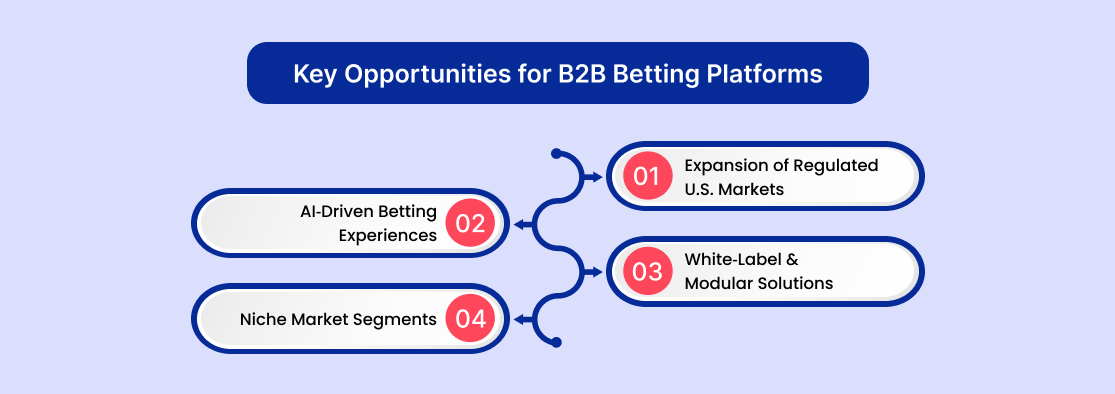
1. Expansion of Regulated U.S. Markets
More places in the U.S. now allow sports betting. Companies need ready-to-go systems like the Turnkey sportsbook solutions that follow all the local rules. Being fast and legal is a huge win for sportsbook operators at the current time.
2. AI‑Driven Betting Experiences
AI helps betting platforms by predicting game outcomes and setting fair odds. It also watches what players like, making sure they see only the most fun and interesting bets!
3. White‑Label & Modular Solutions
How to launch a B2B betting platform in a regulated market in a short time? White-label platforms shorten launch time. Modular systems let operators add features when needed. This lowers entry cost and reduces risk. New brands can start small and scale later. For B2B iGaming technology providers, flexibility becomes a key selling point.
4. Niche Market Segments
Niche betting is growing fast. Esports attracts younger players. Micro-betting keeps users active during live games. Crypto-friendly betting, when allowed, adds speed and choice. These segments help operators stand out in crowded markets.
Essential Features of a Future‑Ready B2B Betting Platform
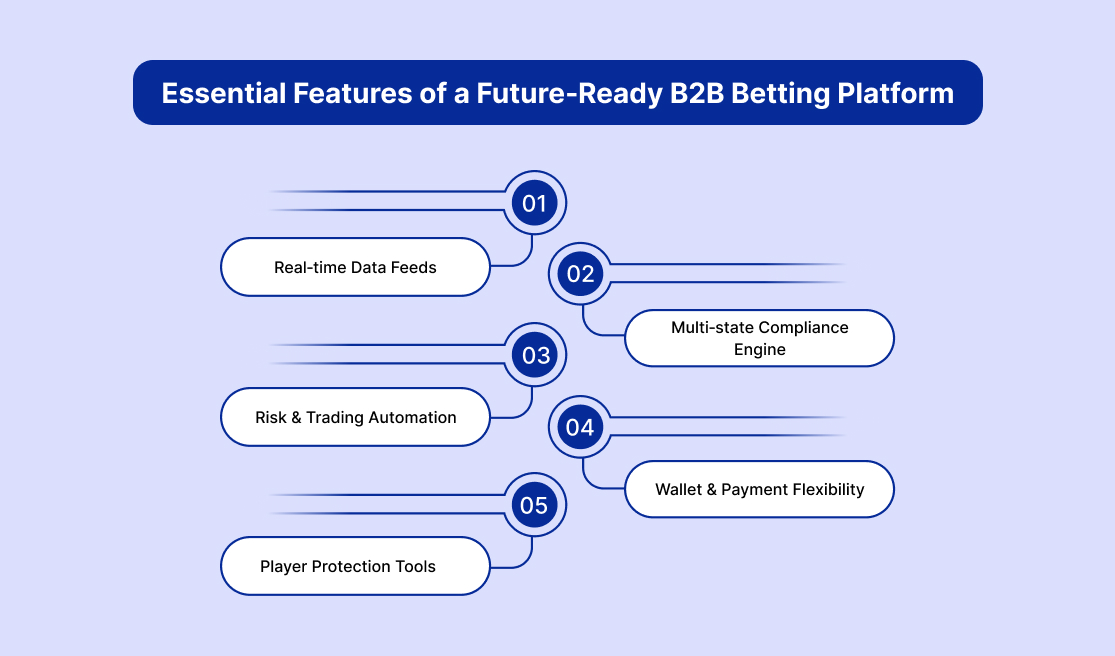
1. Real‑time Data Feeds
Getting the latest game scores and prices instantly is super important. It makes sure bets are fair and lets people bet while the game is happening. Quick info keeps things accurate and competitive.
2. Multi‑state Compliance Engine
A strong betting platform compliance system is like a superhero that changes its rules (like licenses and taxes) for different places. This helps businesses open up shop easily and safely.
3. Risk & Trading Automation
Smart computer programs do the hard work for betting, like figuring out the chances of winning and stopping cheaters. This makes the game fair and helps the platform earn money.
4. Wallet & Payment Flexibility
Players need many simple ways to pay, like using plastic cards, phone apps, or their bank. A good “wallet” makes paying easy with different money types, keeping everyone happy.
5. Player Protection Tools
It’s super important for people to gamble safely. Using tools to set money limits and take breaks helps keep everyone protected. This builds trust.
Steps to Successfully Launch in a Regulated Market
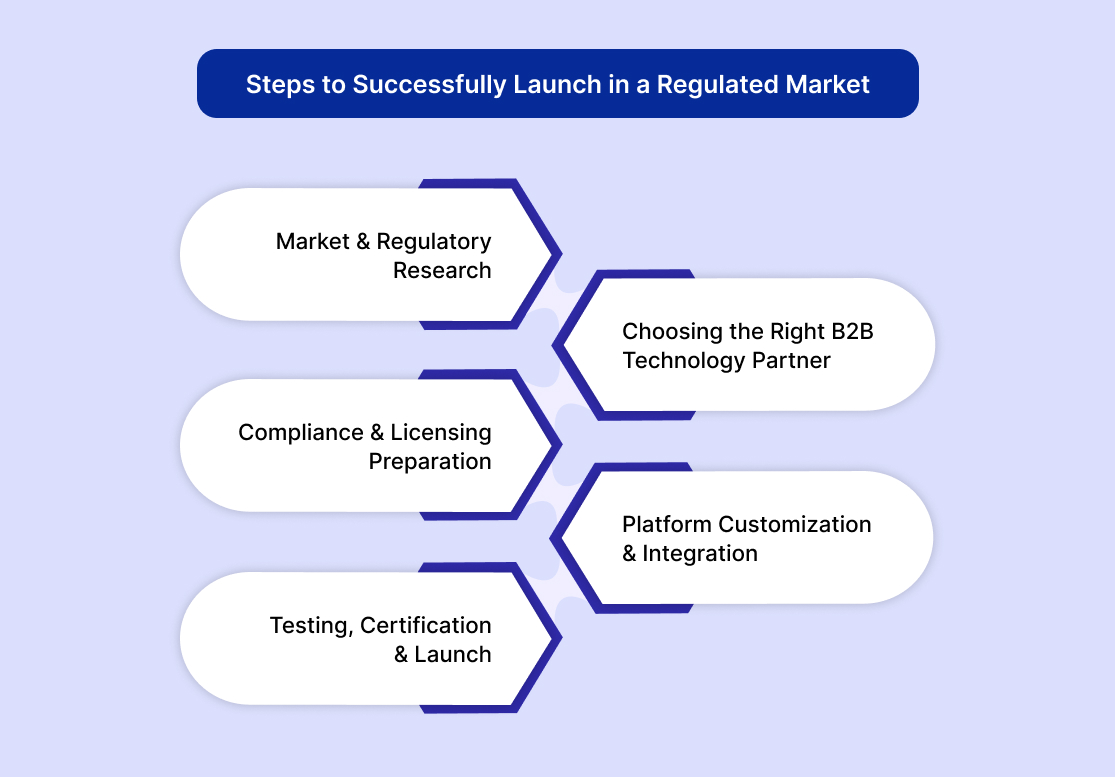
Step 1: Market & Regulatory Research
- Start with the rules.
- Study local laws, tax models, and license needs.
- Check which sports, bet types, and payment methods are allowed.
- Review player limits and data rules. This step helps avoid costly mistakes later.
Step 2: Choosing the Right B2B Technology Partner
Your platform partner matters.
- Choose one with experience in regulated markets
- Check their past launches, support model, and roadmap
A strong B2B partner reduces risk and speeds up the market entry.
Step 3: Compliance & Licensing Preparation
- Prepare all legal and technical documents early
- Set up KYC, AML, and responsible gaming tools
- Align reports with regulator needs
Early betting platform compliance saves time during audits
Step 4: Platform Customization & Integration
- Adapt the platform to local needs
- Customize UI, payments, and game content
- Integrate approved third-party tools
- Keep the system flexible for future changes
Step 5: Testing, Certification & Launch
- Test every feature
- Run security and load checks
- Complete required certifications
- Launch in phases to control risk
- Monitor closely and adjust fast after go-live
Future Outlook for B2B Betting Platforms
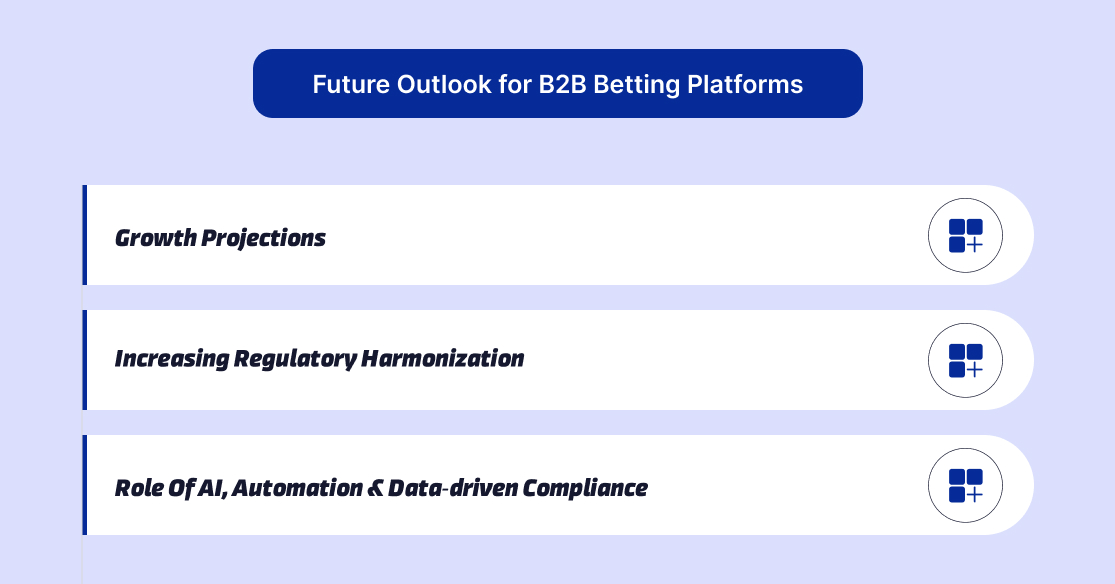
A) Growth Projections
Betting games are growing in many countries, such as those in Europe and Africa. Businesses are using special B2B platforms to start their betting faster and safer. Everyone wants a scalable system to launch betting in many countries at once.
B) Increasing Regulatory Harmonization
The betting rules are getting simpler and more organized. This makes it easier for new companies to start. Platforms that follow the rules automatically will get approval faster, like having a fast pass.
C) Role Of AI, Automation & Data‑driven Compliance
New computer tools are making sure everything is fair and safe. They catch unusual behavior fast, do boring checks automatically, and let people see all the rules on one screen. This lowers the cost and helps everyone trust the system.
Conclusion
Launching a B2B betting platform in a regulated market is challenged by compliance, competition, and technology needs. Yet, opportunities exist in U.S. expansion, AI, and flexible solutions. Success lies in offering “compliance-as-a-service” and fast, localized, data-driven platforms. Thus, launching a betting platform in 2026 is highly beneficial.
GammaStack: Your Only Trusted B2B Betting Platform Provider
GammaStack has stood as a trusted B2B betting platform provider for operators worldwide for the past 14+ years. Our platform supports regulated markets with strong betting platform compliance tools, stable performance, and flexible setup. Built for growth, GammaStack, one of the best B2B sportsbook providers in 2026, helps businesses launch faster, scale smoothly, and adapt to market changes with confidence and long-term reliability.
FAQs
1. How do I get the right license to operate in regulated markets?
To get permission (a license) to run your betting platform, you have to ask the government’s gambling group. You need to show you have money, follow all the rules, and pass checks. Since every country is different, getting legal help is super important.
2. How long does it take to launch after getting a license?
Once you get the OK to start, building the betting platform takes time. A quick, ready-made setup takes 2–8 months. A slightly more custom system takes 3–6 months. Building a unique one via custom builds takes 6 months or more. It all depends on how complex the technology is.
3. What opportunities do regulated markets offer for B2B betting platforms?
Regulated markets can give you trust, more players, and a safer reputation. Operators can grow faster because customers feel secure and governments support fair play. Good sports betting regulations 2026 also help operators build strong partnerships and expand their business legally.