
Introduction
Sports betting businesses today face one big problem. Speed. Players expect live odds, fast bets, and smooth performance. Any delay pushes them away. This is where modern integrations step in. APIs and iFrames help sportsbooks launch faster and scale smarter. They reduce technical load and improve flexibility.
This guide explains how sports betting API and iFrame solutions work, their benefits, risks, and how to choose the right path for long-term growth.
What Is a Sports Betting API?
Definition & Core Function
A Sports betting API acts as a digital bridge. It connects sportsbook data with your betting platform. Through this connection, your system receives live odds, markets, results, and user actions in real time.
APIs allow full control. The frontend, backend, and user journey stay in your hands while the data flows smoothly.
Core functions include:
- Real-time odds and event updates
- Bet placement and settlement
- Player account actions
- System-to-system communication
This explains how sports betting API works at a basic level.
Types of Sports Betting APIs
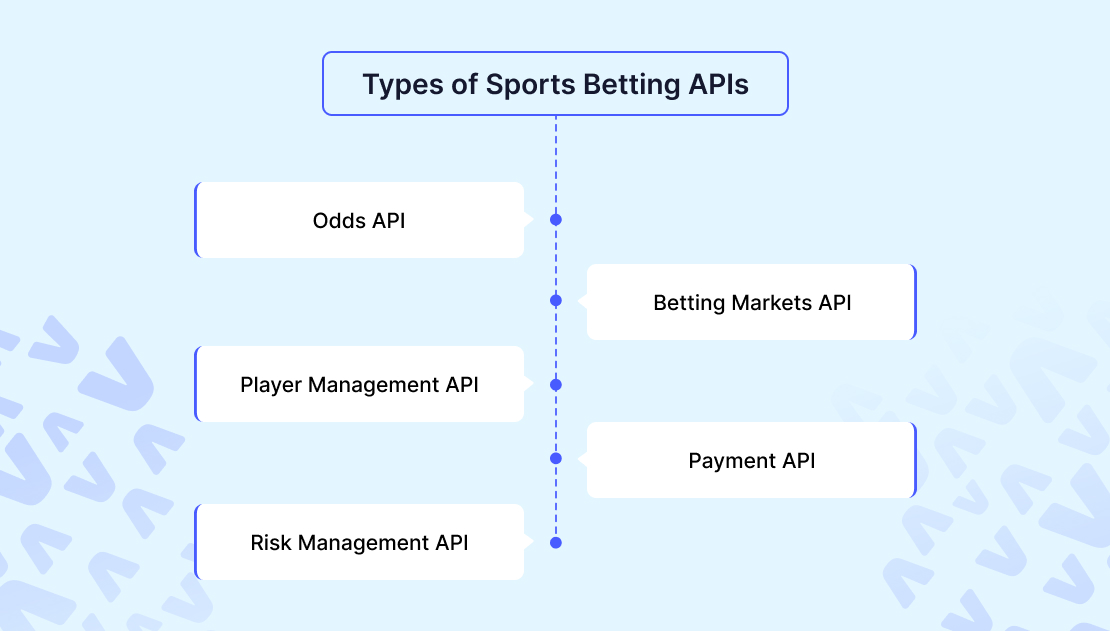
Different APIs serve different needs. Most modern sportsbooks use a mix.
- Odds API: Delivers pre-match and live odds. Often called a Real-time odds API.
- Betting Markets API: Shares available markets, selections, and limits.
- Player Management API: Handles registrations, logins, balances, and betting history.
- Payment API: Supports deposits, withdrawals, and transaction tracking.
- Risk Management API: Manages exposure, limits, and fraud alerts using a Sportsbook data feed API.
Together, these APIs form a complete sportsbook data feed API ecosystem.
What is Sportsbook iFrame Integration?
Definition
Sports betting iFrame integration is a plug-and-play option. The betting interface is hosted by the provider and embedded into your website using a simple code snippet. Your platform shows a full sportsbook without building one from scratch.
How iFrame Works
The process is simple and fast. The iFrame sportsbook runs on the provider’s servers. You only place a small code snippet on your website. There is no heavy backend work. This method needs minimal development effort. Deployment is fast. Updates, odds changes, and fixes are handled by the provider. This makes iFrames ideal for quick launches.
Sports Betting API vs iFrame Integration
| Aspect | API Integration | iFrame Integration |
|---|---|---|
| Control Level | Full – Custom UI/UX, features, data display | Limited – Provider’s interface |
| Customization | Complete (branding, layouts, user journey) | Basic (logo, colors within templates) |
| Launch Time | 3-6 months (development + testing) | 1-2 weeks (simple embedding) |
| Development Cost | High | Low |
| Technical Expertise | Required (dev team, QA, maintenance) | Minimal (marketing focus) |
| Branding | Deep – fully branded experience | Surface-level – provider template |
| Data Ownership | Complete access/control | Limited – provider controls data |
| Scalability | Unlimited – own infrastructure | Provider-limited |
| Maintenance | Ongoing (updates, bug fixes) | Provider handles |
| Performance | Optimized (custom loading) | Provider-dependent |
| User Experience | Tailored to your audience | Standardized across clients |
| Integration Complexity | High (full-stack development) | Low (single embed code) |
| Best For | Established operators | Fast market entry |
API Integration
Sportsbook API integration offers full control. Operators design the interface, manage features, and decide how data is shown. This approach supports deep branding and custom user journeys.
However, it needs strong development resources. Setup time is longer. Testing and maintenance are ongoing tasks.
iFrame Integration
iFrame integration is the fastest way to launch. The interface is pre-built and proven. Operators focus on marketing instead of development.
Customization is limited. Branding options exist but stay within fixed layouts.
Which One Should You Choose?
The choice depends on budget, timeline, and technical strength.
- APIs suit long-term operators with growth plans.
- iFrames suit startups, affiliates, and quick market entry projects.
Key Benefits of Sports Betting API Integration
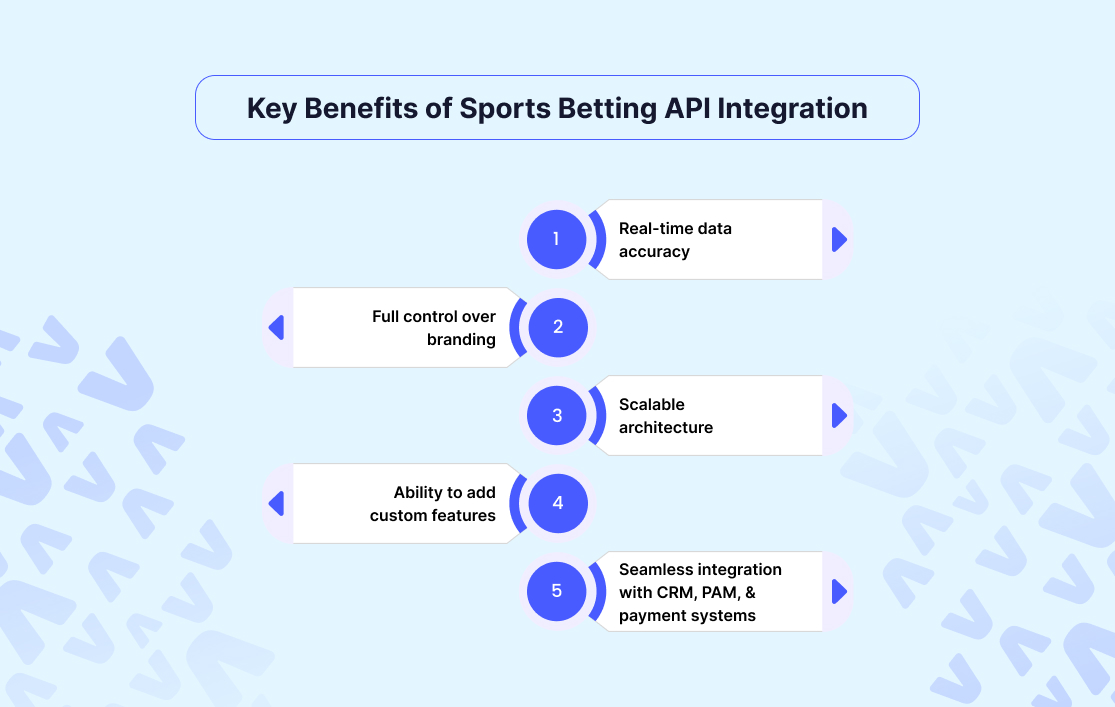
Sports betting API integration gives operators more control and flexibility. It supports fast growth and smoother operations across platforms.
- Real-time data accuracy
Live odds, scores, and market updates stay fresh. This helps reduce errors and improves user trust.
- Full control over branding
The front end follows brand rules. Design, layout, and user flow stay consistent.
- Scalable architecture
The system handles traffic spikes with ease. New markets can be added without delays.
- Ability to add custom features
Unique bet types, rules, and tools can be built as needed.
- Seamless integration with CRM, PAM, and payment systems
Data flows smoothly across systems. Operations stay connected and efficient.
Key Benefits of iFrame Integration
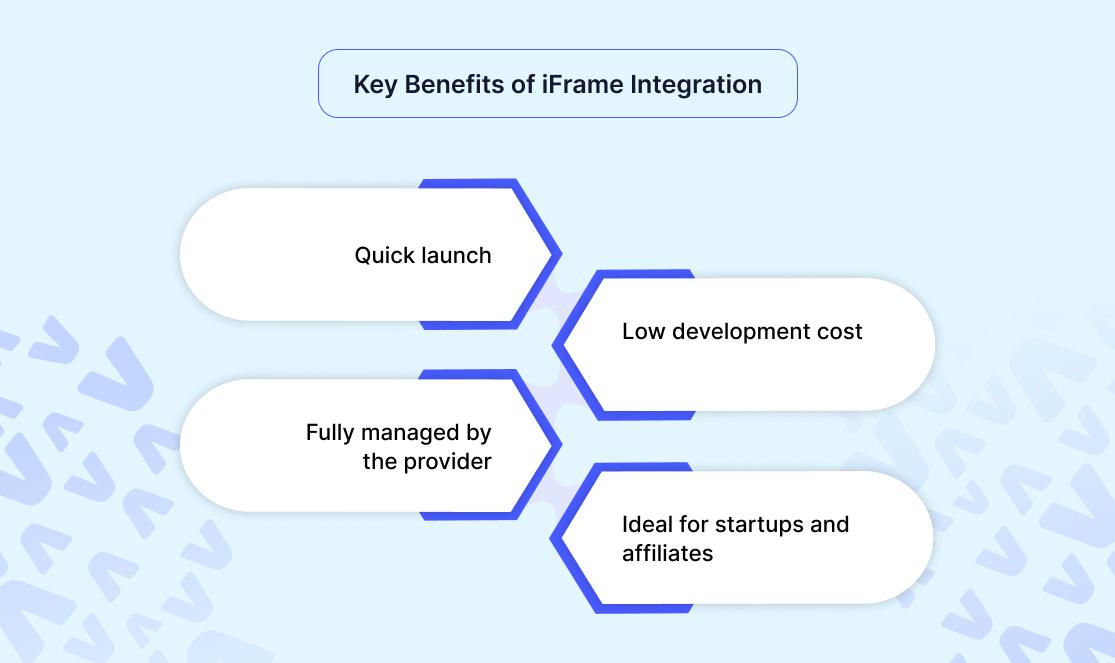
iFrame integration offers a simple way to launch betting or gaming services without heavy development work. It suits businesses that want speed, control, and low risk.
- Quick launch: Go live in days, not months. No complex build process is needed.
- Low development cost: No need to hire large tech teams. Infrastructure and updates stay handled.
- Fully managed by the provider: Hosting, security, and system upgrades are taken care of end to end.
- Ideal for startups and affiliates: Enter the market fast with limited investment and lower operational stress.
This approach allows focus on marketing, user growth, and revenue, while the core platform runs smoothly in the background.
Essential Features to Look for in a Sports Betting API or iFrame
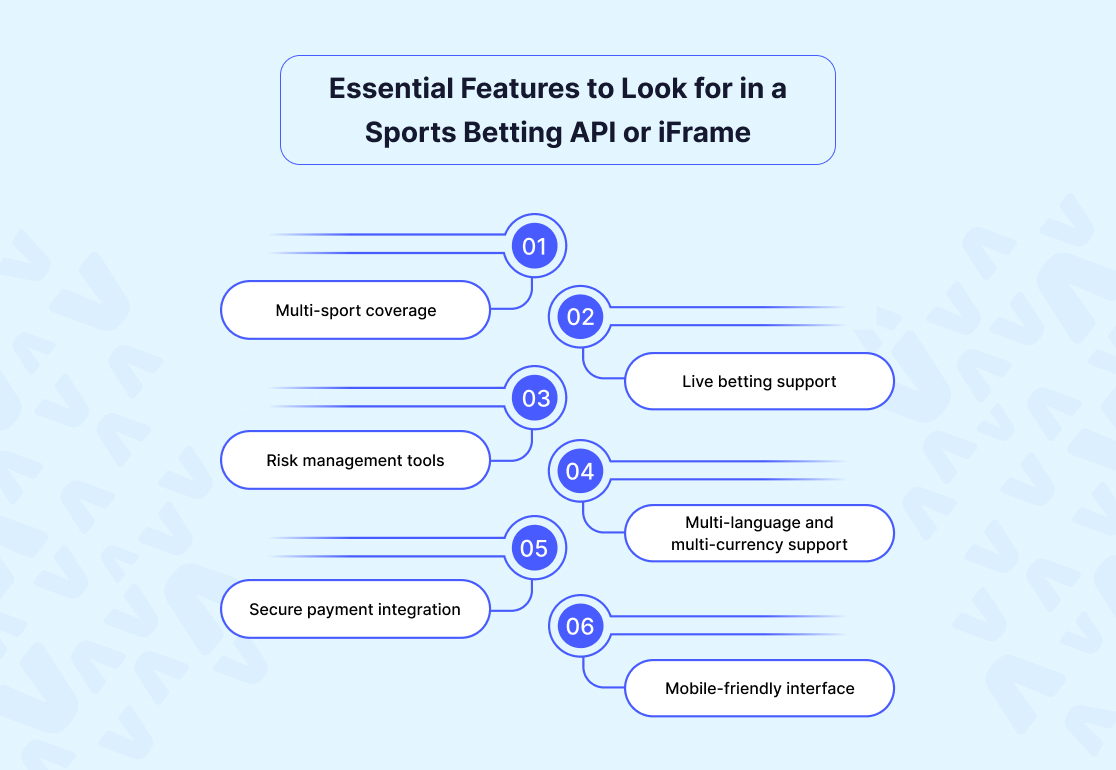
Choosing the right sports betting API or iFrame is key to building a stable and scalable betting business. The right features help improve user experience, reduce risk, and support long-term growth.
- Multi-sport coverage
Support for popular sports and leagues is essential. This helps attract a wider audience. It also keeps users engaged across different seasons and events.
- Live betting support
Real-time odds and fast updates matter. Live betting keeps players active during matches. It also increases bet volume and session time.
- Risk management tools
Built-in controls help manage exposure. These tools track betting patterns and limit losses. They support safer operations and smarter decision-making.
- Multi-language and multi-currency support
Global reach needs local comfort. Language and currency options make the platform easy to use. This builds trust with users in different regions.
- Secure payment integration
Safe deposits and withdrawals are critical. Trusted payment methods protect funds. They also reduce fraud and payment disputes.
- Mobile-friendly interface
Most users bet on mobile. A responsive design ensures smooth access. This improves retention and overall platform performance.
Steps to Integrate Sports Betting API
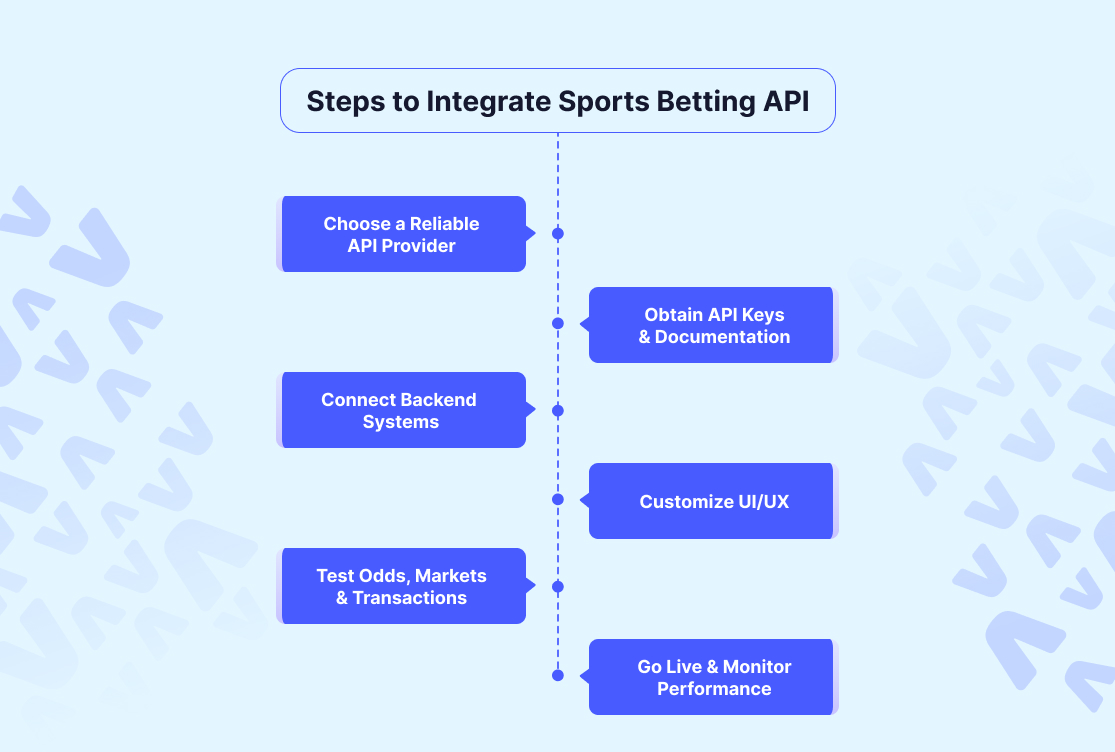
Step 1: Choose a Reliable API Provider
Start by selecting a trusted API provider with proven uptime. The provider should offer wide sports coverage and real-time odds. Strong security and clear support channels are essential for smooth operations.
Step 2: Obtain API Keys & Documentation
Request API keys after onboarding. Review the documentation carefully. It explains endpoints, data formats, and limits. Clear docs help teams avoid errors and speed up integration.
Step 3: Connect Backend Systems
Link the API with core systems like user accounts, wallets, and risk tools. Ensure data flows in real time. Stable connections prevent odds mismatch and betting delays.
Step 4: Customize UI/UX
Adapt the front end to match brand needs. Display markets, odds, and bet slips clearly. Simple layouts improve user trust and reduce drop-offs.
Step 5: Test Odds, Markets & Transactions
- Run test cases before launch.
- Check odds accuracy
- Validate market updates
- Verify deposits and payouts
Fix issues early to avoid live errors.
Step 6: Go Live & Monitor Performance
Launch the platform with live monitoring. Track response time, errors, and user behavior. Regular checks keep performance stable and scalable.
Steps to Integrate Sportsbook iFrame
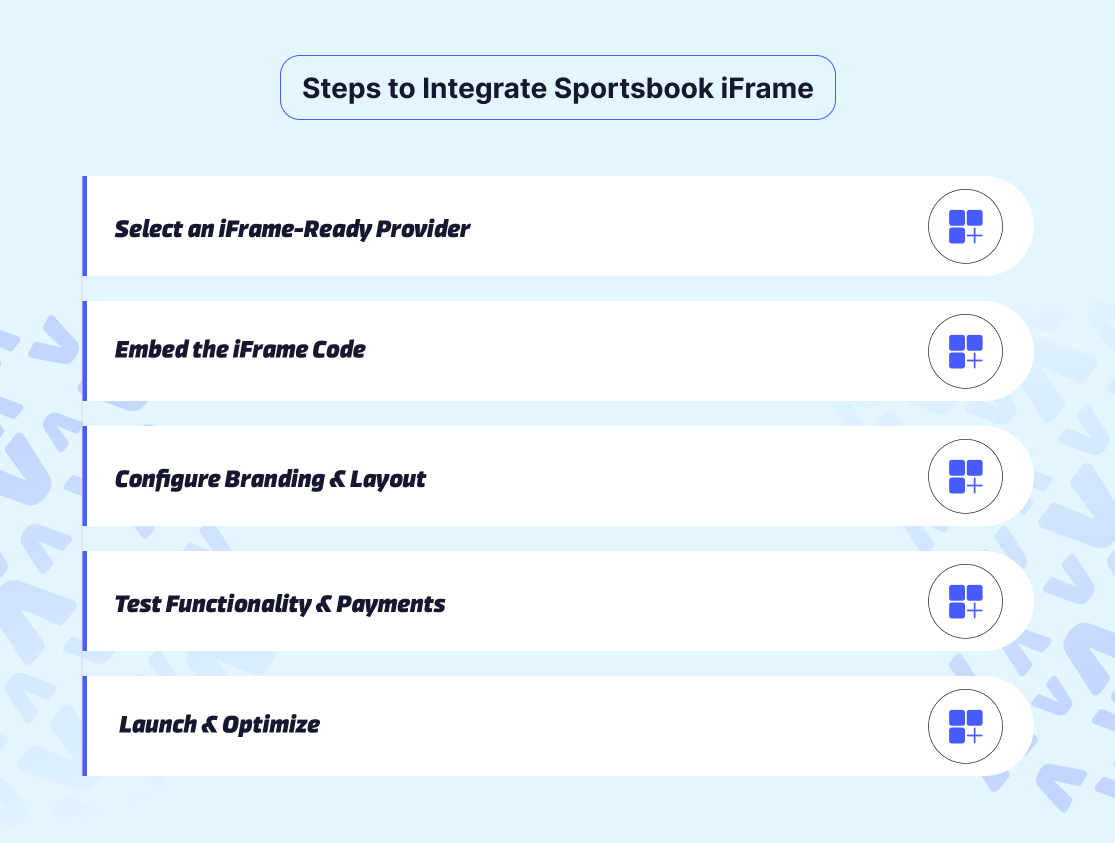
Step 1: Select an iFrame-Ready Provider
Start by choosing a provider that offers a stable and secure iFrame solution. The platform should support fast loading, mobile use, and regular updates. Check for API support, payment options, and compliance tools. A reliable provider reduces future risks.
Step 2: Embed the iFrame Code
The provider will share a ready-to-use iFrame code. Add this code to your website or app where the sportsbook should appear. This step is simple and does not need heavy development. The iFrame loads the sportsbook inside your platform.
Step 3: Configure Branding & Layout
Match the sportsbook with your brand look. Adjust colors, logos, fonts, and menus. Keep the layout clean and easy to use. A consistent design builds trust and improves user experience.
Step 4: Test Functionality & Payments
Before launch, test everything.
- Bets and odds updates
- User login and registration
- Payment deposits and withdrawals
- Mobile and desktop views
Fix issues early to avoid user complaints.
Step 5: Launch & Optimize
Go live after final checks. Track performance, user behavior, and load speed. Use feedback to improve flow, offers, and layout. Continuous updates help grow revenue and retention.
Challenges to Consider
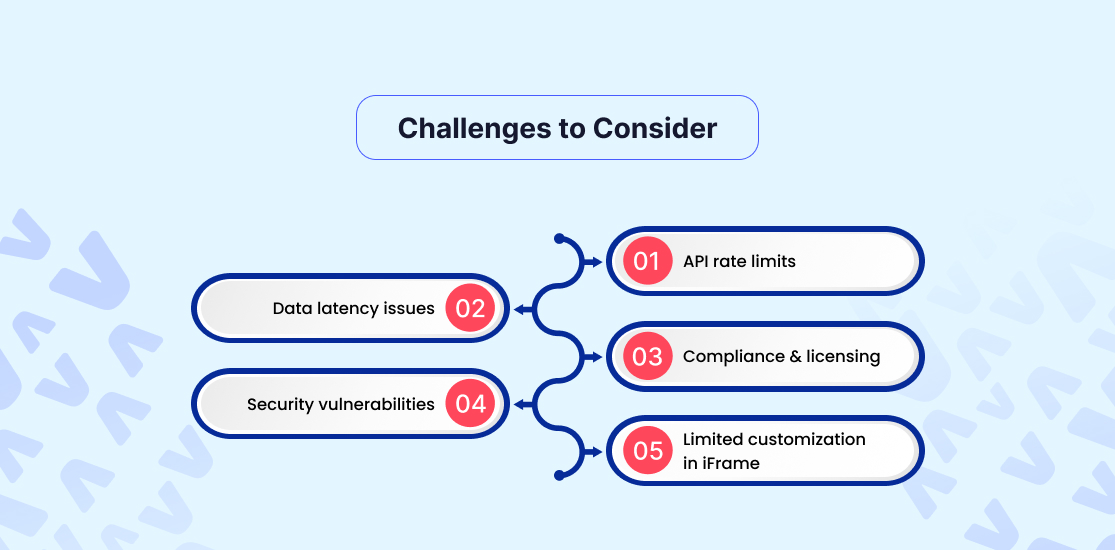
Even strong betting integrations come with limits. Knowing these early helps avoid delays and cost overruns.
- API rate limits
APIs often restrict how many requests can run at once. High traffic can slow data flow. This may impact odds updates, bet placement, or reporting during peak hours.
- Data latency issues
Delays in data delivery affect live betting accuracy. Even small lags can change prices or outcomes. This risk grows during major events with heavy traffic.
- Compliance and licensing
Each region follows different rules. Missing licenses or weak checks can block market entry. Ongoing audits and reporting add extra pressure on operations.
- Security vulnerabilities
Poor authentication or outdated systems increase risk. Breaches can expose user data and disrupt services. Regular testing and updates are essential.
- Limited customization in iFrame
iFrame solutions offer speed but reduce design control. Branding and user flow options may feel restricted. This can impact user experience and differentiation.
Planning for these challenges helps teams build stable, scalable, and compliant platforms.
Future of Sports Betting Integrations
The future of sports betting integrations is moving toward speed, flexibility, and smarter systems. Platforms now focus on tools that adapt fast and scale with demand. These innovations help operators launch more quickly and stay competitive.
- AI-powered odds engines that adjust prices in real time using live data
- Blockchain-based data feeds that improve transparency and reduce data tampering
- Micro-betting APIs that support instant bets during live moments
- Fully modular sportsbook ecosystems that allow easy upgrades and custom setups
Together, these integrations create stronger platforms. They improve performance, support rapid growth, and help operators respond faster to market changes.
Conclusion
Both APIs and iFrames play vital roles in modern sportsbooks. APIs deliver control, scalability, and long-term value. iFrames deliver speed, simplicity, and fast entry.
Choosing the right integration method shapes your growth path. Smart operators align technology with business goals. With the right setup, sportsbook platforms stay competitive, flexible, and ready to scale in a fast-moving betting market.
GammaStack: The Best Sportsbook Provider Offering API & iFrame Integration
GammaStack delivers a powerful sportsbook solution with flexible API and iFrame integration options. These tools help betting businesses launch faster and connect smoothly with existing systems. Our platform supports real-time data, stable performance, and easy customization. Operators can control branding, markets, and user flow without heavy development work. Secure integrations ensure safe transactions and reliable operations. With global coverage and scalable architecture, GammaStack enables businesses to expand confidently and adapt quickly to changing market needs.
Frequently Asked Questions (FAQs)
- Can API and iFrame integrations handle real-time odds and live betting?
Yes. A good sportsbook API gives real-time odds and updates instantly to your own platform. A well-built iFrame solution also shows live odds inside the embedded frame and updates as events happen. But only APIs let you use this data directly for analytics, bots, or custom products.
- How many kinds of data can sportsbook APIs return?
Sportsbook APIs can return many types of data, such as live odds, pre-match betting lines, results, fixtures, stats, player props, payment status, and risk metrics. Some providers also let you pull event details, settlement info, and account balances, all in numeric, structured data for your app to use.
- How does GammaStack help with API & iFrame integration?
GammaStack builds sportsbook APIs and iFrame solutions that plug into your platform smoothly. Their API gives real-time odds, multi-currency support, and scalable architecture, and their iFrame offers a ready betting interface that you can brand and launch faster without heavy backend work. They also help with regulatory compliance and post-launch tech support.