
Legal Compliance & Operating Legally
The most immediate reason is straightforward. It is illegal to operate an online gambling business without a valid license in regulated markets. Authorities are cracking down on illegal gambling. Operating without a license exposes you and your directors to potential legal complications, including criminal prosecution, unlimited fines, and asset seizure. A license is your shield, allowing you to operate legally within the boundaries of the law.
Player Trust & Credibility
In a digital marketplace flooded with options, credibility is your most valuable currency. A license from a respected jurisdiction like the MGA or UK Gambling Commission is a powerful trust signal. It tells players that your platform is audited, your games use certified Random Number Generators (RNGs), and there is a fair gaming environment. This directly translates to higher player conversion and retention. Furthermore, a strong license is often a prerequisite for integrating with major game developers, reputable payment systems, and effective marketing channels. It is the cornerstone of your brand's reputation.

B2C (Business-to-Consumer) Licenses
This is the standard license for operators who offer games directly to players, that is, an online casino or sportsbook.

B2B (Business-to-Business) Licenses
This is for software providers, platform suppliers, and game developers who provide critical services or products to licensed operators. Multiple jurisdictions, like the Isle of Man and Malta, offer specific B2B licenses.

Corporate Group Licence
A corporate group with multiple operational entities gets this licence. It allows a group of companies to operate under a single, unified B2C license. The designated parent company is the nominal holder and assumes compliance duties for the group.

Malta (MGA) License Overview
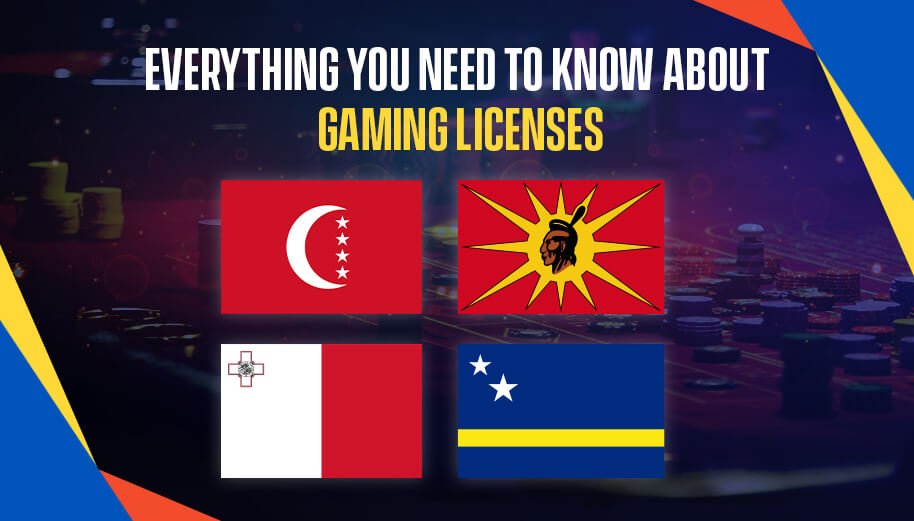
The Malta Gaming Authority license is considered the "gold standard" for EU market access. It has a high reputation, excellent market access across Europe, strong player trust, and well-established technological infrastructure. However, it also comes with higher costs, a complex 3-6 month application process, and a 5% corporate tax on gaming revenue. It is best suited for established operators and B2B providers targeting European players who prioritize credibility and stability.
Curaçao Gaming License
The Curaçao eGaming license is undergoing reforms, but remains a popular, cost-effective entry point. If offers lower costs, a faster application process duration, as little as 1-3 months, and a simple 2% gaming tax on net profits. However, historically, it is viewed as having lighter-touch regulation, which can limit market access in certain countries such as the UK, and affect perceived brand credibility. It is ideal for startups, crypto-friendly operations, and operators testing concepts before pursuing stricter licenses.
UK Gambling Commission License
The UK Gambling Commission (UKGC) license grants access to one of the world's largest regulated markets. It has unparalleled player trust in the UK market, maintaining extremely high standards for consumer protection and responsible gambling policies. However, for operators, that comes with an exceptionally high compliance burden, rigorous financial stability checks, and some of the highest licensing costs and fees in the industry. Operators who are fully committed to the UK market with the resources to meet its demanding standards should go for this license acquisition.
Legal Entity Registration
You must first establish a legal entity within the chosen jurisdiction. This involves appointing local directors, securing a physical registered address, and depositing the obligatory minimum capital requirement.
Preparing Business Plan & Financial Statements
Regulators scrutinize your viability. You will need a detailed business plan with market analysis, financial projections, and marketing strategies. Audited financial statements proving financial stability are mandatory.
AML, KYC & Responsible Gaming Implementation
This is where many applications stumble. You must design and document comprehensive policies for Anti-Money Laundering (AML) and Know Your Customer (KYC). A full program based on customer due diligence, ongoing monitoring, and suspicious activity reporting. Alongside, concrete measures like deposit limits, time-outs, self-exclusion tools, and staff training protocols must be present for gambling control and player safety.
Software & RNG Certification
Your gaming software and platform must be tested and certified by an independent lab to prove game fairness, Random number generator (RNG) integrity, and the security of financial transactions.
Application Submission
Compile all documents, including corporate structure, personal histories of key people, policies, technical reports, and financials, and submit them with the non-refundable application fee to the regulatory authority.
Background Checks & Compliance Review
The regulator conducts deep due diligence. Every license applicant, shareholder, director, and key person undergoes a background check, examining their criminal record, financial history, and professional reputation.
Licence Issuance & Ongoing Compliance
Upon approval, you pay the license fee and receive your valid license. However, the work is not over. Ongoing compliance involves regular reporting, financial reporting, paying gaming taxes and annual fees, and adapting to regulatory requirements updates.
Typical Timeline by Jurisdiction
The application process timeline depends on the complexity of the activities and business model. However, below is an estimated timeline for reference:

Factors That Affect Approval Times
- Completeness and quality of documentation
- Ownership complexity and number of beneficial owners
- Readiness of technical documentation, such as RNG reports, systems architecture, etc.
- Local filings and corporate registrations
- Speed of responses to regulator follow-ups
Tips to Speed Up the Process
- Engage a local consultant. Their expertise is invaluable for navigating jurisdictional regulations.
- Start preparing personal documents early, as background checks often take time.
- Use a compliance checklist to avoid common gaps.
- Designate a single point of contact for the regulator to avoid communication delays.
Incomplete Documentation
The most common reason for rejection or delay. Every requested document, from certified corporate certificates to personal bank statements, must be present, accurate, and properly translated if required.
Financial Stability Concerns
Regulators need proof you can operate for the long term. Insufficient capital, unclear source of funding, or unsustainable financial projections will lead to failure.
Compliance & Technical Lapses
Weak AML or KYC systems, insufficient responsible gambling measures, or a lack of certified RNG game testing often trigger refusal or long delays.