
The sports betting industry is growing fast across global markets. But many bettors and operators still struggle to understand how money is made. This gap leads to poor decisions and lost value. Understanding sportsbook revenue models solves this problem. This guide explains how betting sites make profit, where profits come from, and what this means for smarter betting and better business planning.
The Basics of Sportsbook Profitability
Looking for how do sportsbooks make money? Sportsbooks make money by setting smart prices and getting a lot of people to bet. Their profit comes from carefully managing the chances and the total amount bet. Two key elements drive this model: odds and vig.
The Role of Odds
Odds are based on data, team form, player stats, and market demand. The goal is not to predict winners. The goal is to attract bets on all sides.
Sportsbooks set the odds so that they always take a small cut, called a margin. If the betting is even, they make money no matter which team wins the game.
The Concept of the “Vig” or “Juice”
Vig is the small fee built into the odds. It is not shown as a charge, but it exists in the pricing.
The vig gives the sportsbook a safety net. Even when payouts are made, this margin helps cover risk and operating costs. Over time, it keeps the business profitable and stable.
Key Revenue Streams for Sportsbooks
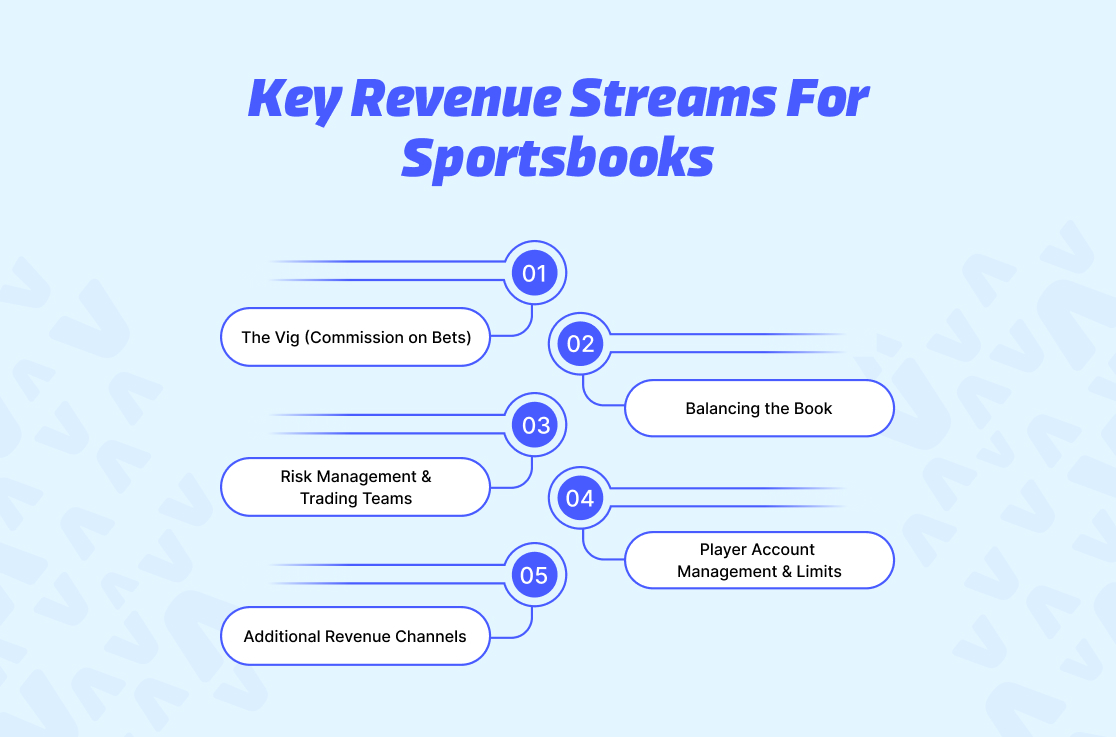
The Vig (Commission on Bets)
Sportsbook margins explained – The vig is a small fee built into every bet. It is how sportsbooks earn a steady income as part of the sportsbook revenue model.
Example: Two players place $110 on opposite sides. The winner gets $200. The sportsbook keeps $20.
Why it works: It earns money on every matched bet. The sportsbook does not need players to lose all the time. It only needs balanced action and consistent betting volume.
Balancing the Book
Balancing the book means pushing bets evenly on both sides of an event. Odds are adjusted to guide player behavior. When action is balanced, payouts are covered by incoming bets. This lowers financial risk and keeps profits stable in a sportsbook business model.
Risk Management & Trading Teams
Trading teams watch betting patterns closely. Lines move when money flows heavily to one side. Algorithms and AI help adjust odds in real time. This protects margins and reacts faster than manual changes.
Player Account Management & Limits
Sportsbooks set betting limits to control exposure. Sharp bettors are identified through patterns and timing. Limits help reduce losses while keeping casual players active and engaged.
Additional Revenue Channels
Casino games add high-margin income. Sportsbooks get new users through partner websites and keep their current bettors with special deals and rewards. This helps the business grow.
How Sportsbooks Use Data & Analytics

A modern sportsbook business model relies heavily on data to stay profitable and competitive. Every bet placed creates useful information. When used the right way, this data helps operators make smarter decisions and reduce risk.
Predictive Modeling for Odds Setting
Sportsbooks are like super-smart fortune tellers for games. They study everything like past scores, player injuries, and team performance, to figure out who’s most likely to win. This helps them set the odds fairly and make sure they don’t lose money.
Monitoring Betting Trends
Betting activity shows how players think. Sportsbooks track which teams attract more money and when bets increase. Sudden spikes can signal insider news or public hype. By monitoring real-time trends, operators are able to adjust odds and balance exposure before the risk escalates.
Fraud Detection and Prevention
Data tools help spot unusual behavior. This includes repeated high bets, fast withdrawals, or linked accounts. When patterns look risky, alerts are triggered. Early action helps stop bonus abuse, match fixing, and payment fraud. This protects both revenue and brand trust.
Challenges Sportsbooks Face

Even with strong systems, sportsbooks deal with daily pressure from the market and players. This is because they need to focus on “how do sportsbooks make money?” besides reducing the challenges.
Sharp Bettors and Arbitrage
Sharp bettors use skill and data to find weak sportsbook odds and profits of the sportsbooks are at risk. Arbitrage players bet across platforms to lock profits. These actions reduce margins. Sportsbooks must react fast with price changes and limits to stay protected.
Market Competition
New platforms launch often. Many offer high bonuses and low margins to attract users. This pushes profits down. These days, to really stand out, you need top-notch tech, a super smooth app, and way smarter risk management.
Regulatory Compliance Costs
Sportsbooks must follow different state rules, checking IDs and keeping honest records to stay legal. These steps add cost and slow expansion. Still, meeting rules is non-negotiable for long-term growth.
Future of Sportsbook Profitability

The next phase of sportsbook growth will be driven by smarter tech and new bet types.
AI And Machine Learning in Odds Setting
AI can read huge data sets faster than humans. It learns from past errors and improves pricing over time. This leads to tighter odds and better risk balance.
Blockchain and Transparent Betting Systems
Blockchain can record bets in a clear and traceable way. This improves trust and reduces disputes. Payments also become faster and more secure.
Micro-Betting and New Revenue Opportunities
These small, live bets called micro-bets rely on things like the next score make sports watching more exciting and increasing betting. For sportsbooks, this opens fresh and steady revenue streams.
Conclusion
Sportsbooks make money by setting the odds so that, over time, they always have a small advantage, called the “sports betting house edge,” on every single bet placed. Even when players win short term, the system stays profitable in the long run. For bettors, smart choices and control matter. For operators, fair pricing and strong risk control help build a stable, trusted betting business.
GammaStack: Top-notch Global Sportsbook Provider
GammaStack stands as a trusted global sportsbook provider for modern betting businesses with 14+ years of experience. Our platform makes it easy for betting operators to work in many countries. It sets up fast, runs smoothly, and is reliable. We help businesses grow confidently and successfully all over the world.
FAQs on How Do Sportsbooks Make Money?
What is the main way sportsbooks make money?
Sportsbooks earn money through a fee called “vig,” which is included in the betting odds. It’s like a small commission they take from every bet placed, guaranteeing a profit over time.
Why do sportsbooks set odds instead of using fair odds?
Sportsbooks make money by setting the betting odds so they always win a little bit more than they pay out, even when bettors win their bets.
Do complex bets like parlays make sportsbooks more money?
Parlays are bets that combine multiple picks. Since every pick has to win for you to get paid, they are harder to hit, which is why sportsbooks make more money from them.
The Author