
Whether you are a startup looking to enter the market or an established sportsbook operator aiming to revamp your platform, one critical decision you must make is selecting the right technology stack for your sports betting software technology. The betting technology stack selection can have a profound impact on the performance, scalability, security, and overall user experience of your platform.
In this blog, we will explore the top betting software tech choices, development phases of sports betting software technology stack and the key factors to consider when making this crucial decision.
Understanding the Basics: Technology Stacks in Sports Betting
The technology stack for sports betting is the comprehensive set of programming languages, regulations, and tools used to create and run a successful sports betting website. These platforms are designed to handle heavy traffic, enormous amounts of data, and financial data in real-time.
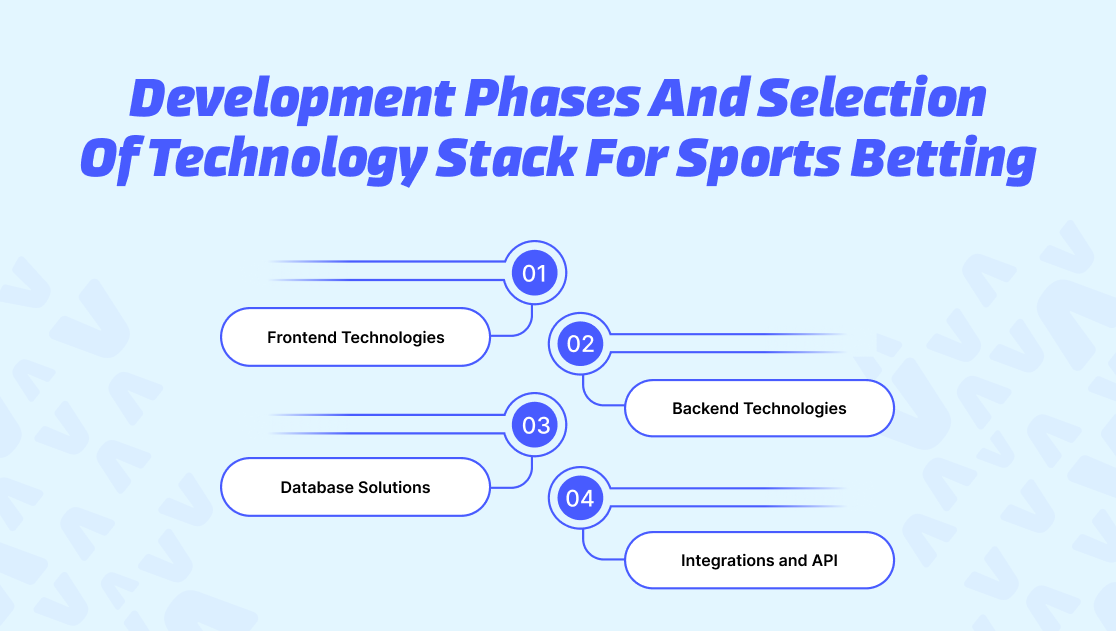
Development Phases and Selection of Technology Stack for Sports Betting
Frontend Technologies
The frontend technologies for sports betting are the front-facing part of the website which users interact with; therefore, it is essential to make it user-friendly and quickly responsive.
Technologies Used
- HTML & CSS: These are the foundation blocks of a website. HTML is utilized for creating content, where CSS ensures that the user interface is friendly and responsive.
- JavaScript: It is utilized for building interactive websites, ensuring a smooth interaction for users.
Frontend Frameworks
- React.js: One of the most preferred choices for building interactive and dynamic UI due to its scalable and efficient nature.
- Vue.js: One of the easiest and lightweight frameworks, small-scale as well as large-scale, for sports betting software development, mainly used for quick deployment.
- Angular.js: This framework is backed by Google for building robust applications. Its two-way binding fuels easy management, making it an appropriate choice for large-scale applications.
Backend Technologies
Backend technology is what is at the back; however, the robust technology behind the entire website operation, handling and management.
Technologies Used
- Node.js: One of the fastest performing and scalable key technologies, efficient for handling large-scale and high-performance real-time applications.
- Python/Django: Utilized for handling, managing and securing application data, saves additional custom development cost, due it its in-built admin interface.
- Java/Spring Boot: A viable option for building large-scale applications. Its convention-over-configuration approach is what eases the software setup and development process.
- Ruby on Rails: One of the widely used technologies for backend development, it responsibly executes logical development. It is most prominently used for modular developments, which fuel real-time data feeds, database support and more.
Database Solutions
- MySQL: One of the reliable database choices, suitable for handling complex data, making it best for intricate transactions and queries. It is also compatible with multilingual features, which makes it a versatile database solution choice.
- PostgreSQL: It strongly supports the XML and JSON data types, making it suitable for complex applications. It is equipped with data-integrity capabilities, making it one of the secure database solutions.
- MongoDB: This solution is most appropriate for unstructured data, as it analyses and transforms complex data into a structured and readable format.
Integrations and API
- 3rd-party Third-party Integrations: Sports betting solutions often require integration with 3rd-party services, such as payment gateways, data providers, or odds APIs/aggregators. Ensure that your sports betting technology stack allows for seamless integration with these services.
- Payment Processing: Payment processing is a critical aspect of sports betting software for catching players from cross-borders via globally accepted wagers and transactions. Choosing the best-fit betting tech stack facilitates various payment methods integrated with international gateways to streamline financial transactions.
- Cloud Infrastructure: Leveraging cloud services can provide the scalability and reliability needed for sports betting platforms. At GammaStack, we recommend employing AWS, GCloud, Azure, or Hard Metal Server to offer the needed infrastructure on-demand, making it easier to manage spikes in traffic.
- Mobile Compatibility: The betting technology stack tips suggest technologies that go well with a seamless mobile gambling experience. Therefore, identifying whether to build native mobile apps for iOS and Android or use cross-platform development tools is essential for selecting the best tech stack for betting apps.
- CRM Systems: Integrating a CRM system into your betting platform can help you build strong relationships with your customers, as through CRM systems you can personalize marketing campaigns as well as improve user experience, ensuring smooth workflow.
- Data Providers: Use certified and authorized sources for gaining access to real-time data feeds and odds using APIs. Sports betting software development is incomplete without data providers because they provide accurate information and improve trust.
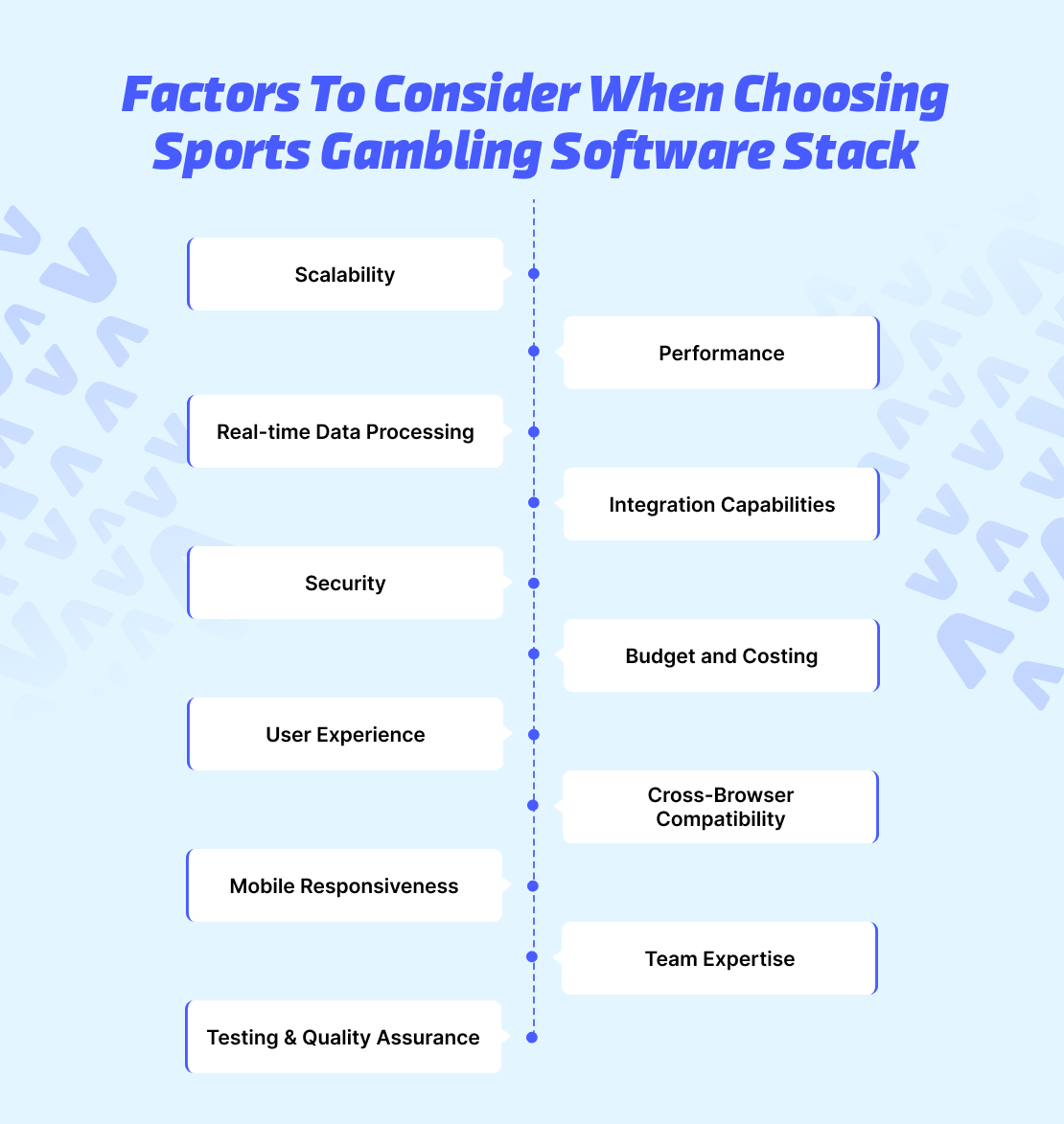
Factors To Consider When Choosing Sports Gambling Software Stack
Scalability
Consider the potential growth of your user base and the volume of data your platform will handle. Your technology stack should be able to scale horizontally and vertically to accommodate increasing demand.
Performance
Ensure that your technology stack can deliver high-speed performance, especially when it comes to processing bets, updating odds, and providing real-time information to users.
Real-time Data Processing
Real-time data updates are crucial in sports betting. Look for technologies that support real-time data processing to keep users informed of odds changes, scores, and events.
Integration Capabilities
Choose the appropriate technology stack for sports betting, which is capable of integrating multiple features into your sportsbook, like 3rd-party integrations, APIs, payment gateways and more, enhancing operational and functional efficiency.
Security
The sports betting industry involves sensitive user information and financial transactions. Your betting technology stack selection should include robust security measures, encryption, and compliance with industry regulations to protect user data and maintain trust.
Budget and Costing
Consider the budget before you start with sports betting software development, because it helps you balance expenses for other causes such as obtaining a license, sportsbook maintenance, security and more.
User Experience
The sports betting solutions should enable a responsive and user-friendly interface to players. Hence, considering frameworks like React, Angular, or Vue.js for building a smooth and visually appealing user experience is elemental.
Cross-Browser Compatibility
Ensure that your frontend technology supports cross-browser compatibility to reach a wide range of users across different web browsers.
Mobile Responsiveness
With the increasing use of mobile devices, it’s important that your sportsbook software development is mobile-responsive, providing an optimal experience for users on smartphones and tablets.
Team Expertise
Assess the expertise of your development team. The betting software tech choices should align with your team’s skills and experience to expedite development and troubleshooting.
Testing and Quality Assurance
Choose a technology stack that facilitates comprehensive testing and quality assurance. Automated testing tools and frameworks can streamline this process.
Sportsbook Software Development Process
Business Strategy Planning
Determine your target audience, geographical scope, and the types of sports and betting markets you want to offer. Establish a business plan, revenue model, and key performance indicators (KPIs) to measure success.
Legal & Regulatory Compliance Check
Research and understand the legal and regulatory requirements in your target markets.
We assist businesses with the plan to obtain the necessary licences and permits to operate legally in chosen jurisdiction.
Market Research & Analysis
Analyse the competitive landscape to understand the strengths and weaknesses of existing sports betting solutions. Identify market gaps and opportunities to differentiate your platform.
Design & User Experience
Create wireframes and mockups for the user interface (UI) and user experience (UX). Design the layout, navigation, and visual elements of your platform to provide an engaging and intuitive experience for users.
Frontend Development
Develop the frontend of your sports betting platform using the chosen sports gambling software stack. Implement responsive design to ensure compatibility with various devices and screen sizes.
Backend Development
Build the backend infrastructure that handles data processing, user accounts, bets, and payment transactions. Here, we ensure that the backend supports real-time data updates and provides secure access to the database.
Database Setup
The betting software development here lets you choose the appropriate database management system based on your data requirements (e.g., relational or NoSQL). Create and configure the database to store user data, betting history, odds, and other relevant information.
Security Implementation
Implement robust security measures, including encryption, firewalls, and authentication mechanisms. This is a vital part of the process which performs regular security audits and penetration testing to identify and address vulnerabilities.
Payment Processing Integration
Integrate payment gateways with full compatibility to your betting tech stack to facilitate deposits, withdrawals, and financial transactions. This ensures support for various payment methods, including credit cards, e-wallets, and cryptocurrencies.
Mobile Application Development
Decide whether to develop native mobile apps for iOS and Android or opt for cross-platform development. Create mobile applications to provide users with a convenient way to access your sports betting platform.
Testing and Quality Assurance
Conduct comprehensive testing to identify and resolve bugs and issues. The process undergoes performing usability testing and load testing to ensure the platform functions smoothly and efficiently.
Launch & Marketing
Prepare for a successful launch by creating a marketing strategy. The step also includes attracting and retaining users through targeted marketing campaigns and promotions.
Maintenance & Updates
Developing sports betting software is an ongoing process that requires ongoing maintenance and adaptation to industry changes and user feedback. Continuously monitoring and maintaining your sports betting platform to roll out regular updates, new features, and bug fixes is pivotal to improve the user experience and stay competitive.
GammaStack: One-Stop Sports Betting Software Technology Provider
GammaStack is the one-stop sports betting software technology and development provider that has everything to offer from the planning stage to finalisation and even onwards. For more than 14 12 years in the industry, GammaStack has helped many businesses chase their dreams of success by launching the best sports betting solutions. using the state-of-the-art betting technology stack guide. We have one of the finest sports betting software technology stack, helping businesses scale while maximizing their operational efficiency.
At GammaStack, we offer betting software development with the added opportunity of 100% customization or ready-to-launch, dispensing on what serves your business needs the best.
From designing to animations, development, and every other minute configuration, our experts and classified team of developers assist in providing all with your chosen betting tech choices to boost your business successfully.
FAQs
What is the importance of choosing the right sports betting software technology stack?
Selecting the right betting tech stack is crucial because it directly impacts the performance, scalability, security, and user experience of your sports betting software. It influences how efficiently your platform handles data, real-time updates, and user interactions.
Why choose Gammastack for Sportsbook Development?
We are the leading provider of sports betting software with over 14 years of experience in the industry. Our software uses the modern tech stack for developing betting software with complete compliance, real-time updates and amazing features.
What factors should I consider when choosing the frontend sports gambling technology stack?
When selecting a frontend technology stack, you should consider factors such as user interface (UI), user experience (UX), and cross-device compatibility.
How can I ensure the security of my sports betting solutions with the right technology stack?
Security is critical. You should choose a technology stack that supports robust security protocols, encryption methods, and compliance with industry regulations. Regular security audits and penetration testing are essential to identify and address vulnerabilities.
What database management considerations should be made during the betting technology stack selection?
Consider the volume and complexity of data your platform will handle. Choose between relational databases like MySQL or PostgreSQL for structured data and NoSQL databases like MongoDB for unstructured or semi-structured data.
What are the betting technology stack tips for my software to support mobile app development?
Yes, it can support mobile versions. You can choose to develop native mobile apps for iOS and Android or use cross-platform development tools like React Native or Flutter to ensure mobile compatibility.
What is the role of cloud infrastructure in the technology stack for sports betting software?
Cloud services like AWS, Google Cloud, or Azure offer scalability, reliability, and cost-efficiency. They provide resources on demand, allowing you to scale your platform based on traffic and data requirements.
How can I ensure that my sports betting solutions remain compliant with changing regulations with the selected sports betting software technology stack?
Select a betting tech stack that can adapt to changes in regulations. Regularly monitor and update your software to ensure compliance with evolving legal requirements in the sports betting industry.
How to choose the best tech stack for betting apps?
- Define your goals and requirements
- Consider Technical Considerations
- Evaluate Budgeting and offerings
- Research the technologies used
- Assess Maintenance & tech support