


According to a source, in 2024, the global sports betting market was estimated to be worth $102.4 billion.
The market size will skyrocket at a CAGR of 11% between 2025 and 2030.
The global sports betting market size is projected to hit $265.5 billion by 2034.

As estimated by various sources —

The global sports betting market revenue will reach $77.18 billion in 2025.
With a CAGR of 5.30%, the market volume is expected to reach $94.89 billion by 2029.
The number of users is expected to be 231.9 million by 2029.
As of 2025, the user penetration rate is 2.5%, which will likely soar to 2.9% by 2029.
According to sports betting revenue statistics, the average revenue per sports betting user is projected to be $389.52.
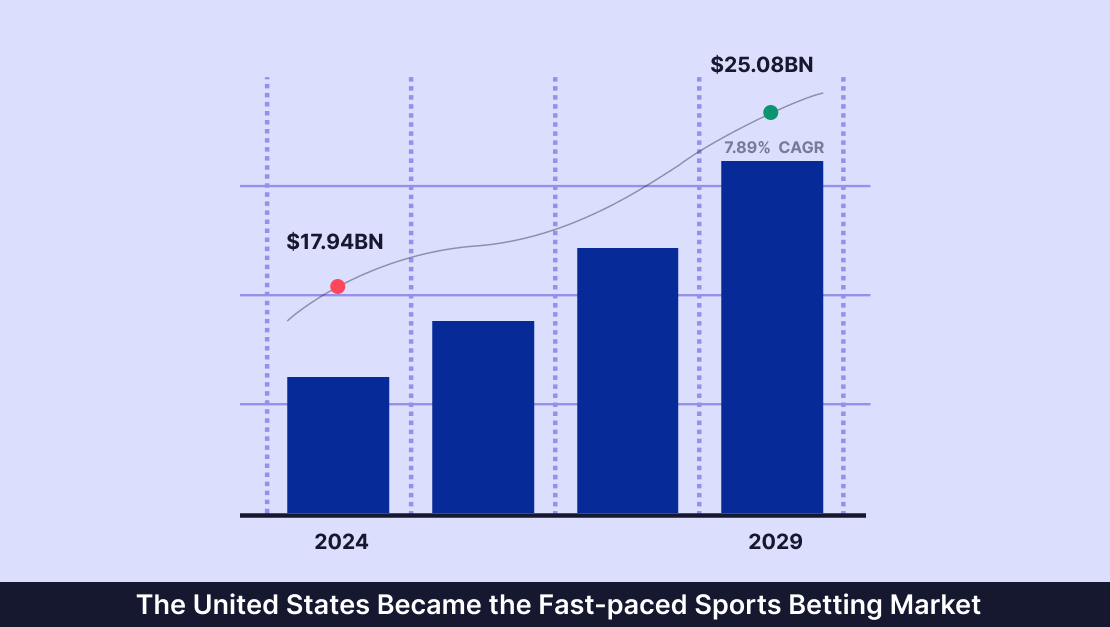
In 2024, the U.S. sports betting market was valued at $17.94 billion.
The US sports betting market is projected to expand at a 10.9% CAGR between 2025 and 2030.
US sports betting revenue statistics reveal that it is forecasted to hit $18.51 billion in 2025 and grow 7.89% annually to $25.08 billion by 2029.
By 2029, the US sports betting market is expected to have 54.8 million users.
US sports betting user penetration is projected to rise from 12.3% in 2025 to 15.5% in 2029.
US sports betting's average revenue per user (ARPU) is projected at $431.73.
Canada leads in sports betting user penetration at 52.9%.
By the end of 2034, North America is projected to hold 24.3% of the global sports betting market share.
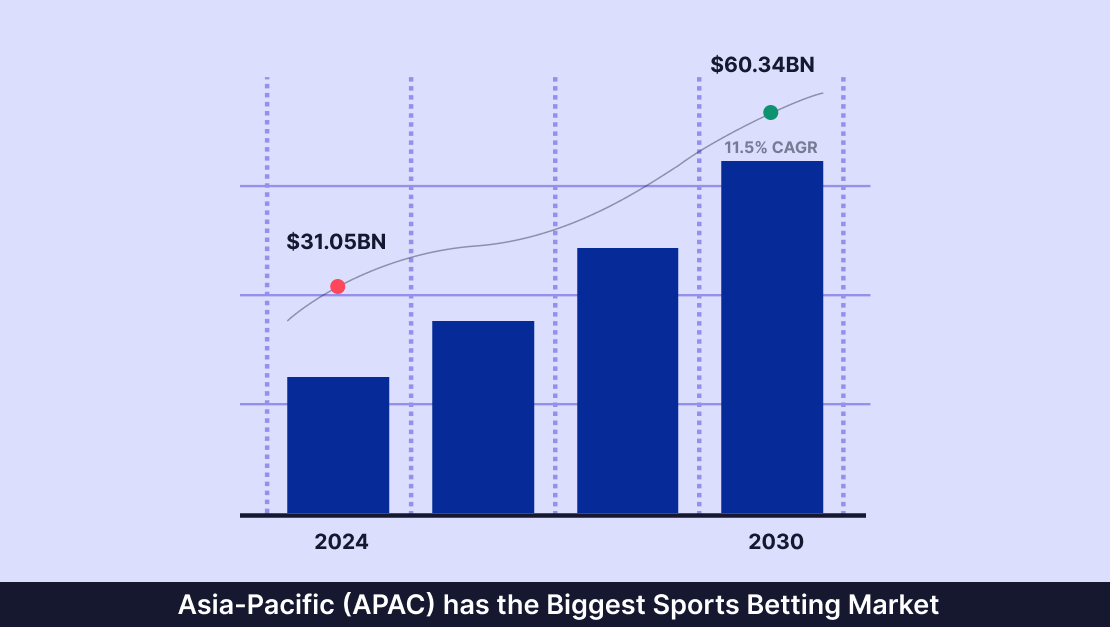
In 2023, the Asia Pacific sports betting market was valued at $28.09 billion.
It was expected to reach $31.05 billion by 2024.
Asia Pacific's sports betting market is projected to grow at an 11.5% CAGR from 2024 to 2030 to reach $60.34 billion.
China led APAC sports betting with 22.8% in 2023, showing growth potential due to Macau and Hainan's regulatory changes.
India, Japan, South Korea, Australia, and the Philippines are key Asia-Pacific countries driving the global sports betting market.
The Asia-Pacific online gambling market is expected to be more than double, growing from $23.9 billion in 2024 to $56 billion by 2033, with a 9.45% annual growth rate.


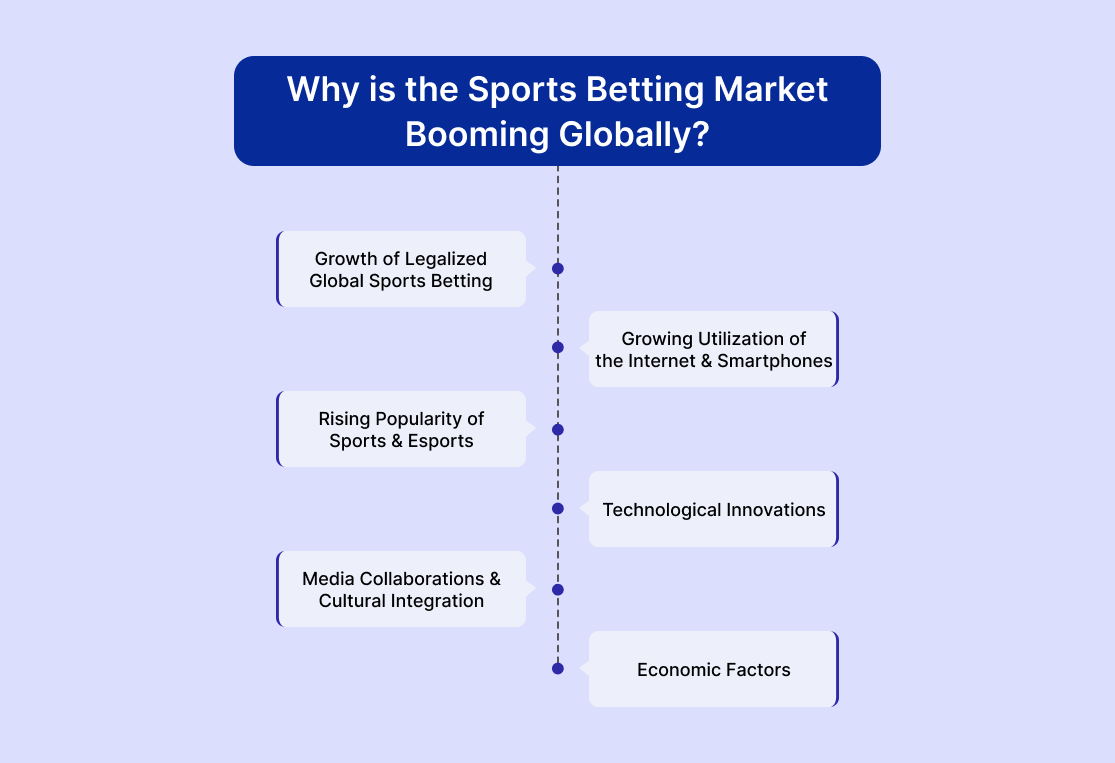
Growth of Legalized Global Sports Betting
Global sports betting growth is fueled by increasing legalization in North America and Europe, which fosters lawful participation and customer trust. The US PASPA repeal of 2018 and easing regulations in other regions are opening new markets.
Growing Utilization of the Internet and Smartphones
Online sports betting is surging globally due to increased smartphone and internet access. Mobile apps attract younger users with convenience and real-time features. Digital connectivity enhances live betting, driving market growth and engagement.
Rising Popularity of Sports and Esports
Major global sports events like the FIFA World Cup, the Olympics, and the EPL drive betting due to vast fan bases. Esports and virtual sports are also gaining traction, especially among younger, tech-savvy bettors.
Rising Popularity of Sports and Esports
Major global sports events like the FIFA World Cup, the Olympics, and the EPL drive betting due to vast fan bases. Esports and virtual sports are also gaining traction, especially among younger, tech-savvy bettors.
Technological Innovations
Tech like AI, machine learning, blockchain, and data tools make betting more personal, safer, and see-through. Smart contracts and fair games build trust and keep users secure.
Media Collaborations and Cultural Integration
Partnerships, celebrity endorsements, and media coverage are making sports betting widely accepted. Games and fantasy sports also make betting popular as entertainment.
Economic Factors
Increased incomes, city growth, and more internet access in developing countries boost the sports betting market. Asia-Pacific, with its large population and growing interest, is a major growth area.




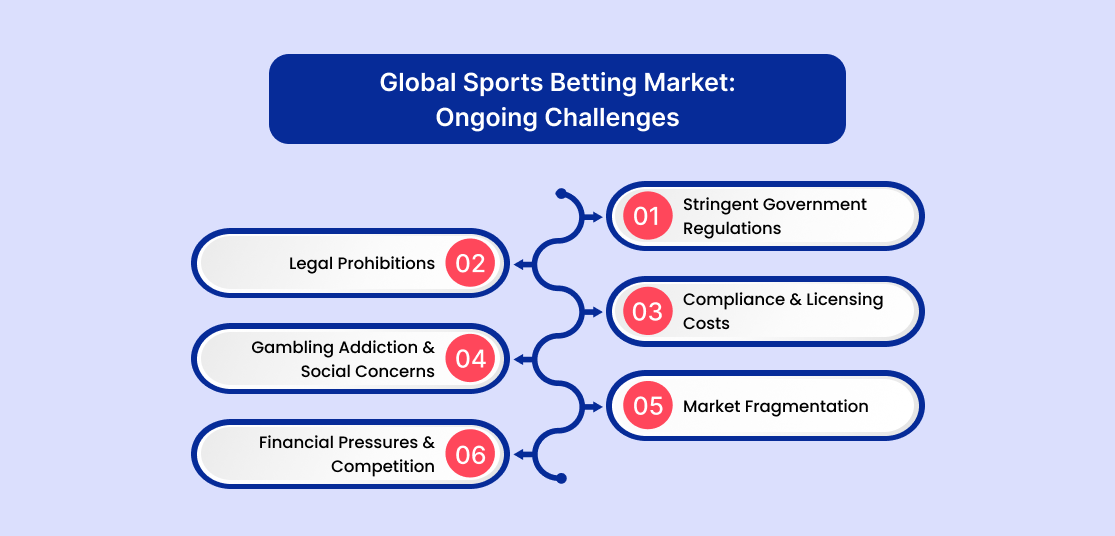

Stringent Government Regulations
Stringent government regulations pose an ongoing challenge to the global sports betting market. These regulations limit market expansion and operational freedom for sports betting operators in many countries.

Legal Prohibitions
Sports betting remains prohibited in many regions. This significantly hinders global growth and market penetration.

Compliance and Licensing Costs
Operators face high costs and complications when complying with different regional regulations. Meeting these diverse requirements leads to significant costs and complexities.

Gambling Addiction and Social Concerns
Concerns about gambling addiction are leading to stricter rules and responsible gaming measures. These changes impact marketing and how sports betting companies attract customers.

Market Fragmentation
Varying legal frameworks result in fragmented sports betting markets. This fragmentation complicates cross-border operations and market expansion efforts.

Financial Pressures and Competition
Growing investments and competition are pushing sports betting operators to innovate. This pressure is essential for them to stay profitable in a dynamic market.

Rapid Online Sports Betting Industry Growth
The online sports betting market is expected to increase from approximately $53.78 billion in 2025 to $93.31 billion by 2030. This represents a compound annual growth rate (CAGR) of about 11.65%. Online sports betting leads the market, providing over 78% of revenue in 2024 and showing the quickest growth.
Legalization and Regulatory Expansion
Sports betting is expanding due to increasing legalization, particularly in the US, with 40 states allowing it by 2025. The regulatory changes in Latin America, Africa, and Asia are also driving market growth. This regulatory liberalization significantly boosts market expansion, contributing to the bright future of the sports betting industry.
Technological Advancements
New technologies are revolutionizing personalized betting experiences, risk management, and fraud detection. These include:
AI-Powered Predictive Analytics
Advanced Machine Learning (ML)
Real-time Data Analytics
Blockchain
Real-Time Odds Adjustment
Natural Language Processing (NLP)
Automated Betting Bots
Mobile and Live Betting
Mobile betting is driving user engagement, and live betting is growing rapidly due to real-time data and convenience. This is majorly contributing to the future of the sports betting industry.
Esports and Virtual Sports
Esports betting is rapidly growing, particularly among millennials and Gen Z, fueled by virtual sports and online tournaments. This trend significantly expands the options available within the sports betting market.
Fan Engagement and Media Integration
Strategic partnerships and endorsements enhance sports betting's visibility and acceptance. Live streaming and social media integration significantly boost user engagement and retention.
Responsible Gambling Focus
Betting companies use tools to help people bet responsibly due to increased rules. These measures include self-exclusion and checks to protect users.
Micro Betting
Microbetting and short-form bets are gaining popularity, especially among younger audiences.
Real-time risk management
Live odds
Advanced CRM
Real-time reporting & analytics
Responsible gambling tools
Multi-currency and multilingual support
Seamless 3rd-party integrations
Choice of sports betting software solutions
24/7 end-to-end support