Why Every Operator Is Suddenly Talking About Prediction Markets

Two years ago, prediction markets were still considered a niche category. Today, they’ve become the next big revenue opportunity in the iGaming industry.

In January 2024, the global prediction market industry processed roughly $32 million in monthly volume. By January 2026, that figure had surged to $12.6 billion. That’s nearly 393x growth in just 24 months.

And this isn’t some crypto-native niche anymore. Major operators and consumer platforms are already moving in.

  • DraftKings launched DraftKings Predictions.

  • FanDuel partnered with CME Group to launch FanDuel Predicts.

  • Fanatics rolled out Fanatics Markets.

  • Even Robinhood is talking about prediction markets in their earnings calls. Q1 2026 earnings across the industry told a very consistent story: iGaming is outperforming sports betting, and prediction markets are the product category every analyst is asking about.

So what exactly are prediction markets, why are they exploding right now, and most importantly, how can operators like you get in without betting the farm on custom development?

Let’s break it all down.

Want the short version? Talk to our prediction markets team directly.

Schedule a Demo

What Are Prediction Markets?

At their core, prediction markets are pretty simple. They’re platforms where people wager on the outcomes of real-world events. Unlike traditional sportsbooks that focus only on sports, prediction markets can cover almost anything with a measurable outcome:

Here’s how it works in plain English:

A market gets created around a question. A typical market might ask questions like:

  • Will Bitcoin cross $100K by December?
  • Will the Fed cut rates before July?
  • Will a specific candidate win an election?

Players buy contracts on outcomes, usually “Yes” or “No.” The price of each contract reflects what the crowd collectively believes the probability is. If “Yes” is trading at 65 cents, the market is saying there’s roughly a 65% chance that event happens.

If you’re right, you get paid $1 per contract. If you’re wrong, you lose what you paid. That’s the whole game.

Why this matters for iGaming operators

The mechanics are extremely close to what your players already understand from sports betting. A player who can place a bet on whether Manchester United will win on Saturday can just as easily bet on whether the Fed will hold rates next month. Same muscle, different event.

The difference between prediction markets and a traditional sportsbook comes down to three things:
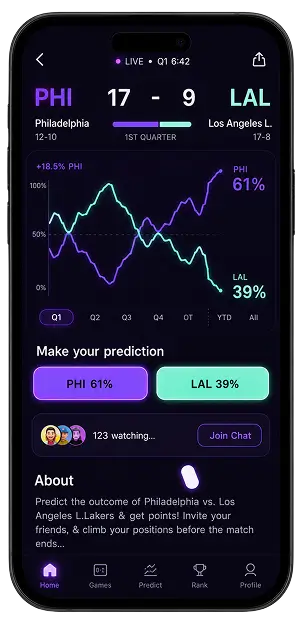

Event diversity

Sportsbooks are limited to sports (obviously). Prediction markets cover politics, finance, entertainment, weather and virtually any event with a verifiable outcome.. That means engagement doesn’t drop off when the football season ends.

Always-on calendar

There’s always a Fed meeting coming up, always a crypto price move happening, always a geopolitical event unfolding. The content pipeline never runs dry.

New audience

Prediction markets attract users beyond traditional sports bettors, including finance-focused, crypto-native, and news-driven audiences. That’s incremental audience, not cannibalization.

The Market Right Now

Let’s talk hard data, because the growth story here is unlike anything else in iGaming right now.

Metric Number
Total 2025 notional volume $44 billion+
Monthly volume, Jan 2026 $12.6 billion
Total transactions (cumulative) 859 million+
Unique users globally 3 million+
Projected market by 2030 $1 trillion (Bernstein forecast)
Volume growth forecast, end of 2026 370% year-over-year

The market is dominated by two major platforms:

  • Polymarket (decentralized, crypto-native)
  • Kalshi (centralized, CFTC-regulated).

Together they hold roughly 88% of total volume. But that’s just the trading side. On the iGaming side, the story is just beginning.

In 2025, five major U.S. operators launched prediction market products: DraftKings Predictions, FanDuel Predicts, Fanatics Markets, Underdog Team Picks, and PrizePicks. All five use the same basic model: centralized, peer-to-peer, CFTC-regulated, event-based trading.

But here’s the key insight for operators outside the U.S.: that model doesn’t work everywhere. The CFTC regulatory window is specific to America. For operators targeting global iGaming markets across Latin America, Europe, Asia, and Africa, a different approach is often required. This is where prediction markets designed specifically for iGaming operators come in, using fixed-odds betting mechanics instead of trading exchange mechanics.

Two Different Models — Trading vs. Betting

Not all prediction markets are built the same. There are two fundamentally different models, and which one you choose determines everything from your regulatory obligations to your revenue mechanics.

Model 1: Event-Based Trading (Exchange Model)

This is what Polymarket and Kalshi do. Players buy and sell contracts with each other (peer-to-peer). They can enter or exit positions before the event is resolved, much like trading stocks. The platform earns through transaction fees.

This model works well for financially sophisticated users who think in terms of positions, spreads, and contract pricing. But it requires exchange infrastructure, regulatory approval as a financial venue, and a user base comfortable with trading interfaces.

Model 2: Event-Based Betting (Fixed-Odds Model)

This is the iGaming-native approach. Players buy contracts at fixed odds — essentially placing a bet. They can’t sell before resolution. The platform (the operator) acts as the counterparty and earns through the built-in margin, just like a sportsbook.

For operators, this model is dramatically simpler. It works under existing gambling licenses, uses familiar sportsbook mechanics, gives you full margin control, and your players already understand how it works. No learning curve.

The bottom line: If you’re an iGaming operator, the fixed-odds model is almost certainly the right starting point. It lets you test prediction markets as a new vertical without rebuilding your infrastructure or applying for new regulatory approvals.


What Events Can You Offer?

Politics & Elections

Who wins the next election? Will a leader leave office this year? Will a bill pass?

Economics & Finance

Crypto — How high will Bitcoin go this month? Will Ethereum hit a price target? Sports — Who will win the World Cup? Will a specific player secure a championship title? Prediction markets can cover all of these scenarios. And yes, while this overlaps with traditional sportsbooks, it also creates valuable cross-selling opportunities for operators.

Entertainment & Culture

What will a movie's Rotten Tomatoes score be? Which song will top the charts?

Weather & Climate

How many tropical storms this year? What will the temperature be tomorrow?

Technology & Science

Will a tech company hit a milestone? When will a product launch? Industry data shows that sports continues to be the highest-value prediction market category. In early 2026, four of the ten most profitable wallets on Polymarket focused primarily on sports-related markets. But the real strategic value for operators is in the non-sports categories. That's where you capture audience during off-seasons and attract users who would never open a sportsbook.

Regulation — The Reality Check

Here’s the honest truth about prediction market regulation: it’s complicated, it varies by region, and it’s actively evolving. However, with the right operational model and compliance approach, it doesn’t have to be a barrier to entry.

North America

The U.S. market is regulated by the CFTC. Platforms like Kalshi hold Designated Contract Market licenses. However, regulatory challenges still exist at the state level. Arizona, for example, filed criminal charges against Kalshi, while Ohio imposed a $5 million fine. Canada allows only financial/economic prediction contracts with 30+ day maturities.

Europe

Some countries (Netherlands, Spain, Denmark) have vague rules that let international platforms operate. Others (Italy, France, Germany) require local gambling licenses. Malta is developing the world’s first dedicated prediction market regulatory framework. The UK requires a Gambling Commission license.

Latin America

Mostly uncharted. Brazil’s Ministry of Finance blocked some platforms. Argentina, Venezuela, and Colombia blocked Polymarket. But the category remains available in many countries without explicit prohibition.

Asia

Mixed. Semi-regulated in Japan, South Korea, Hong Kong. Prohibited in Singapore, China, Thailand.

Oceania

Australia banned Polymarket in 2025 as an unlicensed gambling service. A local license is required.

The operator takeaway

If you’re using a fixed-odds betting model (not a trading exchange), your existing gambling license may be sufficient in many jurisdictions. This is a significant advantage over the trading-platformapproach. Always confirm with your legal team, but the regulatory path for iGaming-native prediction markets is far simpler than for exchange-based ones.

How to Launch — The Practical Playbook

Launching Prediction Markets: The Operator's Playbook
You don't need to build from scratch. Here's the realistic path to launching prediction markets on your platform:

Step 1

Choose your integration model

Operators typically have three deployment options: white-label solutions for the fastest launch, API integrations for a balance of flexibility and speed, or fully custom development for maximum control and customization. For most operators testing the waters, API or white-label is the right starting point.

Step 2

Select your event categories

Don’t try to do everything at once. Start with 2-3 categories where you have the strongest audience overlap. If you run a sportsbook, sports + politics is a natural combo. If you run a casino, entertainment + economics might resonate better.

Step 3

Integrate pricing and risk management

This is the part most operators underestimate. Prediction market odds need continuous monitoring, adjustment, and risk management, much like sportsbook trading operations. Look for a solution that handles automated pricing and risk scoring so you’re not building a trading desk from scratch.

Step 4

Position it within your existing platform

The most effective approach is to integrate prediction markets as a dedicated section or tab within your existing sportsbook or casino platform, rather than launching them as a completely separate product. This enables cross-selling and keeps your existing player base engaged.

Step 5

Launch lean, iterate fast

Start with a limited event lineup, measure engagement and revenue metrics, then expand based on what your specific player base responds to.

Timeline reality check: With a pre-built solution, operators can launch in a matter of weeks rather than months. Custom builds typically take 3-6 months depending on complexity.

Why GammaStack

Why Operators Choose GammaStack for Prediction Markets

Multiple deployment options

White-label for speed, turnkey for a complete package, custom development for operators who want full control. API and iFrame integration options that work with any existing platform architecture.

White-label for speed, turnkey for a complete package, custom development for operators who want full control. API and iFrame integration options that work with any existing platform architecture.

Full event coverage

Coverage across sports, politics, economics, crypto, entertainment, weather, and technology, with support for binary, multi-outcome, and range-based market formats.

Coverage across sports, politics, economics, crypto, entertainment, weather, and technology, with support for binary, multi-outcome, and range-based market formats.

Built-in risk and pricing management

Automated odds calculation, configurable margins, exposure management, and real-time monitoring. You don’t need to hire a trading team.

Automated odds calculation, configurable margins, exposure management, and real-time monitoring. You don’t need to hire a trading team.

Regulatory flexibility

Our solutions are designed to work under existing gambling licenses using the fixed-odds betting model. No CFTC registration required for markets outside the U.S.

Our solutions are designed to work under existing gambling licenses using the fixed-odds betting model. No CFTC registration required for markets outside the U.S.

Multi-currency support

Fiat and crypto, integrated with your existing payment infrastructure.

Fiat and crypto, integrated with your existing payment infrastructure.

Clone solutions available

Platforms inspired by Polymarket, Kalshi, PrizePicks, and Augur, fully customizable and ready for rapid deployment.

Platforms inspired by Polymarket, Kalshi, PrizePicks, and Augur, fully customizable and ready for rapid deployment.

GLI-33 certified infrastructure

The same compliance standards that power our sportsbook and casino platforms.

The same compliance standards that power our sportsbook and casino platforms.

Frequently Asked Questions

faqs

Are prediction markets legal?

The legality of prediction markets depends on jurisdiction. In the U.S., they’re regulated by the CFTC. In most other markets, prediction platforms using fixed-odds betting models can operate under existing gambling licenses. We recommend confirming with your legal counsel for your specific market.

How are prediction markets different from sports betting?

The mechanics are similar as both involve wagering on outcomes. The key difference is event diversity. Prediction markets cover politics, economics, entertainment, weather, and more — not just sports. This means year-round engagement without dependence on the sports calendar.

Do I need to build a trading exchange?

No. The iGaming-native approach uses fixed-odds betting, not peer-to-peer trading. This is simpler to operate, fits under existing gambling licenses, and gives operators direct margin control.

How long does it take to launch?

With GammaStack’s white-label or turnkey solutions, operators can go live in as few as 5 weeks. Custom builds typically take 3-6 months.

Can I integrate prediction markets into my existing sportsbook or casino?

Yes. GammaStack’s solutions integrate via API or iFrame into any existing platform. You can deploy prediction markets as a homepage widget, dedicated section, or embedded page within your current product.

What kind of revenue can prediction markets generate?

Revenue depends on your player base, market selection, and margin configuration. However, the industry data is clear: sports alone drove $16.9 billion in lifetime trading volume on Kalshi through 2025. The top 10 most profitable traders on Polymarket generated $22 million in combined profit in just Q1 2026.

Do prediction markets cannibalize sportsbook revenue?

Industry trends suggest the opposite. Rather than cannibalizing sportsbook revenue, prediction markets tend to attract incremental audiences, including users interested in finance, news, crypto, and current events who may not traditionally engage with sports betting. For existing sportsbook users, prediction markets also help maintain engagement during off-seasons and quieter betting periods throughout the week.

World Map

India

USA

Malta

Latvia

Latvia

Krišjāņa Valdemāra iela 149 - 5, Rīga, LV-1013

Marijas iela 2a, Centra rajons, Rīga, LV-1050 WEST entrance.

USA

3411 Silverside Road, Tatnall Building Ste 104 Wilmington, De 19810

Malta

Dragonara Business Centre, 5th Floor, Dragonara Road, City/locality St. Julians Stj 3141

Indore

6th Floor, Crystal IT Park, Indore 452014 (M.P.), India

158 PU4 Scheme no. 54 1st floor above Rajal Emporium Beside to Car24, Indore

Latvia
USA
Malta
India

Let's Work Together. Win Together

Ready to transform your ideas into next-generation solutions? Drop us your details and we’ll get back to you within 48 hours!