
Building an online casino is not just about games. Many operators struggle with slow platform, security risks and poor user experience. Choosing the wrong technology stack can lead to downtime, data issues and lost revenue creating frustration for both operators and players.
The right tech stack solves these problems. It ensures fast performance, strong security and smooth gameplay across devices. It also supports scaling as the business grows. This guide explains the key technologies used in online casino platform and how they help build a stable, high-performing system.
What is a Technology Stack?
A technology stack, also known as the tech stack, is a set of tools, frameworks and systems used to build and run a software. It includes both front-end and back-end components. The front end is what the users see and interact with. The backend handles data, logic and system processes via casino CMS and back office software as well as PAM.
A typical tech stack in an online casino software development also includes databases, servers, APIs and cloud services. Each layer works together to keep the platform fast, secure and stable.
What Technology Stack is Used for Online Casino Platforms?
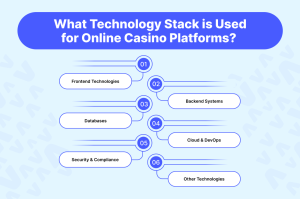
A strong technology stack is the backbone of any online casino platform. It supports game performance, user experience and secure operations. For operators, choosing the right tech stack helps ensure stability, speed and long-term growth.
Frontend Technologies
The frontend is crucial as it is the interface players interact with, requiring speed and ease of navigation. Simple, responsive designs ensure smooth functionality across devices and keep users engaged.
- HTML5, CSS3, JavaScript: These three are the core building blocks making the platform responsive. Additionally, frameworks such as React or Vue.js speed up development and add smooth animations.
- WebGL: This powers 3D slots and live dealer casino technology visuals. It renders graphics right in the browser without requiring any app downloads.
- Progressive Web Apps (PWAs): PWAs let sites feel like native apps. You can send push notifications for bonuses like casino mobile app development and let players play offline if you offer.
Backend Systems
The backend handles important tasks like user accounts, game rules, and transactions. A strong backend ensures the game runs smoothly and stays stable, even when many players are online.
- Node.js, Java or Python: These technologies are the top picks for speed and handling real-time action. Node.js offers event-driven setup for live games. Java offers rock-solid stability for big ops.
- Microservice Tools: Splitting tasks into small services like one for logins and another payouts helps to avoid crashes if one part fails. Tools like Kubernetes manage them in the cloud.
- WebSockets: This tech is the key for live chats, dealer streams and instant casino results. They work perfectly without any page refreshes.
Databases
With every game round, the data volume increases and thus online casino software require scalable databases. The database stores all data including the bets and wins of the players.
- MySQL or PostgreSQL: This database technology helps to retain structured information like user accounts and transaction logs. They ensure ACID compliance for money safety. ACID compliance are a set of 4 principles – Atomicity, Consistency, Isolation, and Durability ensuring that the database transactions are processed reliably.
- MongoDB or Redis: Use of NoSQL is for rapid access to game states and leaderboards, with Redis storing frequently accessed data to reduce load times.
- Hybrid Setup: A hybrid setup mixes both the above technologies creating balance. Additionally, adding Kafka ensures your database can scale with logging millions of events.
Cloud & DevOps
Modern online gambling sites use cloud technology for seamless casino operations. Cloud and DevOps remove the need for physical servers and manual setup.
- AWS, Azure, Google Cloud: A scalable server is worth investing in. These cloud technologies auto-scales during promos and jackpots. In addition to this, CDNs like Cloudflare speed up global access.
- Docker & Kubernetes: These are open-source container technologies or package code for easy deploys. They handle failover if traffic spikes.
- CI/CD Pipelines: This is an automated workflow that works to test the website for any bugs and updates accordingly. It keeps the platforms fresh without any downtime.
Security & Compliance
To keep a casino platform safe from cyberattacks and frauds, security needs to be in place. Similarly, to avoid shutdowns due to illegal gambling, the casino platforms must follow global and jurisdictional compliance.
- SSL/TLS Encryption: SSL and TLS are security protocols used to create a secure, encrypted connection between a web browser and a website. They help protect information like passwords, credit card numbers, and personal details by making sure that data sent over the internet cannot be read or changed by hackers. When players visit a website with “https” in the URL, it means SSL or TLS is active and their data is safe.
- RNG Certification: RNG stands for random number generator. It is a technology that determines the outcomes of a gamble. Since they are automated and doesn’t let others tamper the results, the outcomes are fair. Additionally, Blockchain adds tamper-proof logs.
- AI Fraud Detection: AI-based fraud detection tools spots bonus abuse or money laundering in real-time. Know Your Customer (KYC) tools verify the players’ details upfront.
Other Technologies
Apart from all the tech stack mentioned above, there are a couple of technology stacks that the operators must focus on as well.
- Machine Learning: Machine Learning (ML) helps study player behavior and gambling patterns. It supports fraud detection, churn prediction and personalized game suggestions.
- APIs: APIs connect the casino platform with 3rd party services like payment gateways, game providers, CRM tools and analytics systems. They ensure smooth data flow and fast integration.
- Blockchain: Blockchain adds transparency and security to transactions. It supports provably fair gaming and helps build trust with players.
- Biometric Authentication: Biometric authentication uses fingerprint or face recognition for login. It improves account security and reduces fraud risks.
- AR/VR: AR and VR create immersive casino experiences. Players can explore virtual gaming rooms and interact in real-time if the platforms are AR/VR compatible.
- Web3 Wallets: Web3 wallets allow users to store and use crypto assets. They support fast, secure and decentralized transactions.
- Voice/Chat AI: Voice and Chat AI handle customer support and user queries. They offer instant responses and improve player engagement.
8 Reasons to Choose the Best Tech Stack for Your Casino Software
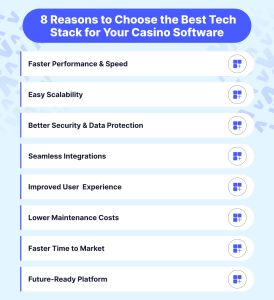
Faster Performance & Speed
A strong tech stack ensures quick load times and smooth gameplay. Players stay longer when the platform runs without delays.
Easy Scalability
The right setup supports growth as user traffic increases. It handles peak loads without slowing down the system.
Better Security & Data Protection
Advanced technologies protect user data and payment details. This reduces risk and builds long-term trust.
Seamless Integrations
A flexible tech stack of an online casino software connects easily with APIs, payment gateways and game providers. This helps expand features without major changes.
Improved User Experience
Clean design and fast response improve player satisfaction. A better experience leads to higher player retention rates.
Lower Maintenance Costs
Modern tools reduce system errors and downtime. This cuts long-term operational costs.
Faster Time to Market
Efficient technologies speed up development and deployment processes. Operators can launch their platform quickly and stay ahead of their competitors.
Future-Ready Platform
A strong tech stack supports upgrades and new features. It keeps the platform ready for market changes and new trends.
How to Choose the Best Tech Stack for Your Casino Website: Tips & Tricks
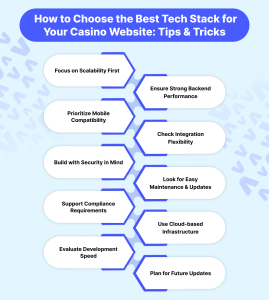
Focus on Scalability First
Choose a tech stack that can handle growing traffic without slowing down . Your platform should support peak loads during big events and promotions.
Ensure Strong Backend Performance
Pick technologies that process the bets quickly and handle real-time data with ease. A fast backend improves user experience and keeps players engaged.
Prioritize Mobile Compatibility
Most users access casino platforms on their mobile devices. Your tech stack must support smooth performance across all screen sizes.
Check Integration Flexibility
Your platform should connect easily with payment gateways, game providers and 3rd party APIs. Flexible integration helps you expand features without delays.
Build with Security in Mind
Choose technologies that support strong encryption and secure data handling. This protects user data and builds long-term trust.
Look for Easy Maintenance & Updates
A simple and clean tech stack reduces downtime during updates. It also helps your team fix issues faster and roll out new features smoothly.
Support Compliance Requirements
Make sure that your tech stack can handle KYC, AML and regional regulations. This keeps your business safe and avoids legal risks.
Use Cloud-based Infrastructure
Cloud systems improve uptime and allow quick scaling. They also reduce hardware costs and support global operations.
Evaluate Development Speed
Choose tools and tech stack that allow faster development and deployment. This helps you to capture your preferred market quickly.
Plan for Future Updates
Select a tech stack that can adapt to new trends like AI and blockchain. This ensures that your platform stays relevant in a fast-changing market.
GammaStack’s Tech Stack: A Brief Overview
GammaStack supports casino operators with complete and flexible tech stack for casino platform development. Our platform connects games, payment systems and player management in one place. With 14+ years of experience in iGaming software solutions, we offer easy API integrations and smooth performance across devices. Built-in security, reporting and scaling tools help you manage growth, reduce risk and run casino operations without technical stress.
|
Parameter |
Tech Stack Availability |
|
Framework |
React.js |
|
Mobile |
React Native |
|
Progressive Web Apps (PWAs) |
Yes |
|
Responsive Design |
Mobile-First |
|
Language |
Node.js – Express Framework |
|
Database |
PostgreSQL |
|
Caching |
Redis |
|
CDN |
Cloudflare |
|
SSL/TLS Encryption |
Yes |
|
DDoS Protection |
Yes |
|
Two Factor Authentication (2FA) |
Yes |
|
Compliance Certification |
GLI-33, ISO 27001 |
|
Payment Gateways |
25+ Options |
|
KYC Providers |
Sumsub, Veriff, IDcomply, Seon |
|
Affiliate Platforms |
Myaffiliate, Scaleo |
Frequently Asked Questions (FAQs)
What backend technologies are used in online casino platforms?
Online casino platforms use Java, Node.js or Python to manage logic, users and data flow.
Which frontend technologies power casino websites and apps?
Frontend usually uses React, Angular or Vue to create smooth and responsive user experience. GammaStack ensures clean design and quick loading enabling you to offer players a simple and engaging experience.
What databases are used in casino platforms?
Casino platforms use MySQL, PostgreSQL or MongoDB to store player data via player account management (PAM) system, bets and transactions safely.
How do casino platforms handle payments and transactions?
Online casino websites use casino API integration for payments and gateways to support cards, wallets, UPI and crypto payments. GammaStack integrates trusted payment systems from 25+ reliable providers that process transactions quickly and keep all data protected.
What security technologies are used in online casino platforms?
Security technologies include – SSL/TLS, firewalls and anti-fraud tools to protect users and operators’ data. GammaStack uses advanced security layers like 2FA, KYC, AML etc., to prevent threats and keep the platform safe at all times.
The Author