Global iGaming gross gaming revenue (GGR) reached $115 billion in 2026, up 12% y-o-y, with regulated markets contributing about 68% of total revenue. Despite industry growth, individual operators struggle financially because of regulatory bans, rising compliance costs, heavy taxation and licensing fees, and liquidity constraints.
So, how do you run an iGaming business that stays compliant, supports steady cash flow, and engages customers?
iGaming card battle games are emerging as a popular solution, helping operators meet regulatory requirements, meet public demand, and diversify revenue streams.
If you are unsure about card battle game monetization strategies and how to launch and scale the business, this article is for you. At GammaStack, we have developed one of the premier platforms to speed up launch while ensuring engagement and seamless operation. Connect with our team for more details.
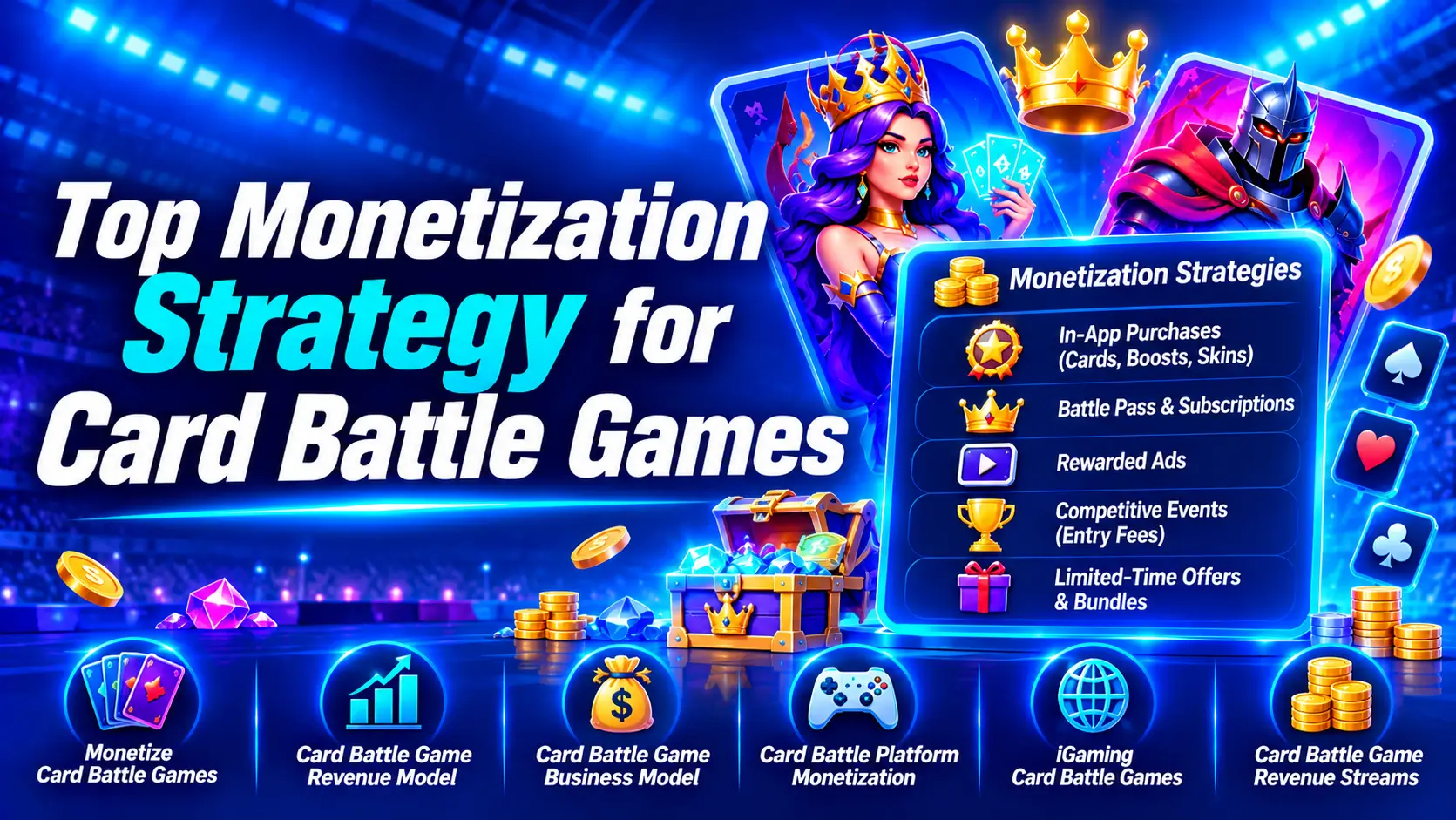
10 Card Battle Game Monetization Strategies
Let’s look at some unique ways to monetize a card battle platform.
Sell Collectible and Premium Cards
The collectible card games market size is estimated at US$ 16.31 billion in 2026, and is projected to reach US$ 37.54 billion by 2034, at a CAGR of 10.98% during the forecast period (2026-2034). In a strategy-based game like battle cards, players build custom decks with different abilities, characters, and actions.
Collectibility is a key driver of card battle game revenue streams. Operators can create different rarity tiers (common, rare, epic, and legendary), and then add premium variants to each. These premium cards can be animated or part of a limited-edition style.
To keep the game fair, don’t give these premium cards undue power or advantage.
Mystery Boxes and Card Packs
Mystery boxes and card packs are one of the easiest-to-implement card battle cash monetization methods. Players can unlock them by winning a tournament or progressing on the leaderboard, and you can also make them available for a fee.
Players can use the mystery boxes to progress in the game, be better equipped for new battles, or replenish their existing deck. However, you need clearly defined rules and guidelines for purchasing card packs.
Create Paid Tournament and Competition Models
One of the best card battle game revenue models is paid tournaments and competitions. Card battle platforms support PvP battles and house-led tournaments. In the free-to-play option, opponents are randomly allocated, with winners progressing on the leaderboard.
To increase income, operators can run paid tournaments for professionals, giving them access to special competitions and championship series. However, real-money skill-based tournaments often require licensing, so you must check with local regulatory authorities.
Introduce Premium Progression and Battle Passes
Battle passes create recurring card battle game revenue streams. These passes drive 10-40% of revenue for F2P (Free-to-Play) titles, and they serve a dual purpose: generate income and retain customers. It also gives players access to premium content, such as special cards, innovative battles, and better rewards.
Build Exclusive Loyalty Layer
Reward your patrons for consistently showing up on the platform; this improves customer loyalty and fosters engagement. Some popular characteristics of a tiered loyalty program include:
- Cosmetic perks
- Early tournament access
- Access to bonus packs
- VIP support and personalized offers
As an iGaming operator with existing offerings like sportsbook, lotteries, and casinos, a unified loyalty program across all verticals can work to your advantage.
Limited-Time Events and Seasonal Content
A popular marketing and selling strategy is to play on consumers’ FOMO (fear of missing out) psychology. A recent survey found that in-app purchases, limited-time bundles, and daily deals have a conversion rate of 18%. These timed events create urgency and give players who may have left the game midway one last-ditch effort to progress on the leaderboard.
Seasonal contests like holiday battles, or introducing themed card sets, can further improve your card battle game monetization opportunities.
Introduce a Subscription/Memebership Model
In-game subscription models guarantee regular cash flow and higher customer lifetime value for operators. For players, they offer convenience, an uninterrupted gaming experience (subscribers are often not subject to in-game advertising that hampers the user experience), and more content.
Sponsored Tournaments and Partnerships
Brand-sponsored events, championships, and co-branded cards help operators generate income without charging players. Sponsors pay you to access your engaged audience base and promote their brand and its offerings, while you get a funded prize pool and access to a combined marketing mechanism.
Personalization and AI-driven Recommendation
Use player data to tailor a personalized experience. Analyzing a player’s journey on your platform lets you reach out when they leave mid-tournament (lowering attrition and customer acquisition cost), suggest battles (improving engagement), and offer mystery boxes (improving retention).
AI-based recommendations reduce operational costs and hassles, while improving the player experience. However, it is important to note that you shouldn’t overtly push a player to make purchases, as that can go against responsible gambling protocols.
Cross-sell and Cross-vertical Monetization
As an iGaming operator, if you have an extensive offering, i.e., sports betting, lottery, casino, roulette, and card battle games, then this is a gold mine for generating steady income. You can tap into your existing customer base by cross-selling different products.
You can use marketing tools like unified accounts, shared wallets, and cross-vertical promotions to keep your customers engaged while ensuring continuous revenue growth.
How to Build a Sustainable Card Battle Economy
- Balance Free and Paid Content – Do not make the entire gameplay about paid access, as this strategy can backfire. Let players play and join tournaments without upfront payments, while a paid subscription offers faster play and more variety.
- Control Card Rarity and Supply – Uncontrolled inflation of rare cards can make the purchase feel worthless, hurting the long-term growth strategy. Put a cap on the number of rare cards.
- Design Meaningful Progression – Tournaments and battles should give players a sense of progression, including unlocking new levels, cards, or special powers.
Key KPIs to Track For iGaming Card Battle Games
| KPI | What It Measures | Why It Matters |
|---|---|---|
| DAU / MAU | Daily and monthly active users | Baseline engagement; stickiness = DAU ÷ MAU |
| Retention | % of players returning after install | Predicts long-term revenue |
| Payer Conversion Rate | % of active users who make a purchase | Shows monetization efficiency |
| ARPU | Revenue per active user | Overall monetization health |
| LTV | Lifetime value of a player | Sets your acquisition budget ceiling |
| CAC / LTV: CAC Ratio | Cost to acquire vs. value returned | Profitability of growth |
| Battle Pass Attach Rate | % of players buying the pass | Health of your recurring layer |
| Pack Purchase Rate | % of players buying packs | Strength of card acquisition loop |
| Tournament Participation Rate | % of players entering paid events | Competitive engagement |
| Session Length & Frequency | Time and visits per player | Depth of engagement |
| Churn Rate | % of players lost per period | Early warning for retention issues |
| Cross-Sell Rate | % of card players using other verticals | Value to your wider iGaming business |
Common Card Battle Monetization Mistakes to Avoid
Here are some card battle monetization mistakes that operators must be aware of:
- Creating a pay-to-win design, where only paid players have opportunities to progress on the leaderboard.
- Over-monetizing or introducing hard paywalls early on in the game. Start offering paid components only after players have familiarized themselves with the game and shown continued interest.
- Catering all the services to whales or paid members.
- Neglecting responsible gambling practices to increase revenue.
Launch a Next-Gen Card Battle Game With GammaStack
Card battle game monetization begins even before the first player signs up. For any operator, a successful card battle game business model starts with investing in the right platform to power their brand. Your iGaming software should match your brand aesthetic, integrate easily with existing platforms, comply with regulatory requirements, and scale as your brand grows.
At GammaStack, we have spent years perfecting the technology powering your business. Our engineers have created an advanced battle card gaming technology that ensures seamless operation, a secure playing experience (AML/CFT controls, KYC protocols, and responsible gaming controls), and an advanced user experience.
Want to learn more about card battle games? Book a demo with our consultants today.
The Author